Someone’s been making mulberry juice with his hands…again.

Weird cloud means RUN HOME!

Whatever floats your boat.
This past week I did an operation which resulted in the untimely death of a patient. The man had come to the hospital with his daughter, hoping that I could do an operation on her. She had been born with an anorectal malformation and shortly after birth she underwent a diverting colostomy. The girl was now seven years old. The father had heard there was a surgeon at the hospital and he came in the great hope that I could do an operation to repair the defect and reverse the colostomy. This is a pretty specialized operation and not one I have experience in doing. I had to tell him that, sadly, I could not undertake the operation. I thought we were done, but he kept talking. The interpreter informed me that the father also needed surgery. He had been operated several years ago for a bowel obstruction and he had what is called an enterocutaneous fistula. This means that the intestines have a hole which communicates with the abdominal wall. The result is that intestinal contents drain continuously. It is a miserable condition. Disappointed to not be able to help the daughter, I thought I might be able to help him. There is nothing quite so dangerous as wanting to help someone.
In an ideal world, a detailed record of prior operations would be available. Imaging studies would help delineate the location of the fistula, determine the amount of scarring, suitability to recover from a major operation, etc. In the context of this hospital, my pre operative work-up consisted of looking him over and figuring that I could probably help him. Would it be a difficult and risky operation? Yes, it most certainly would. The intestines were going to be stuck together and it would be difficult to free them up and repair the holes. He was malnourished, as these patients always are. This is a combination of malabsorption from a shortened working intestinal tract, and the tendency to not eat or drink. These patients learn that the more they take by mouth, the more drains out the hole. I’ve had a lot of experience dealing with these operations, and without seeming vain, I knew I was his best shot at fixing the problem.
As I began operating, I quickly realized that the intestines were very stuck together. I changed tactics and tried operating through the upper abdomen, to find a window. There were no accessible planes. In a difficult operation, you look for that critical juncture, where you either go forward or you stop, limit the damage, and do whatever you need to do to finish the operation. Unfortunately, by the time I had reached that point, I had already burned my bridges and I had torn the intestines in several places. I had no option but to keep going on. I eventually ended up removing a huge knot of intestines, and sewing the ends together. I also tore a large hole in the urinary bladder. It was so thin that I thought it was a membrane. I eventually was able to close the abdomen and send the patient to the ward. I knew that he would not be able to survive, and in fact he died two days later.
Here’s the thing about a high risk operation; it is risky. Maybe 9 times out of 10, things will go OK, but not always. The stakes are very high. Now I am left with the terrible knowledge that I saw a person who was walking, talking, living his life and providing for his family, and I performed an operation that ended in his death. I made the decision and my hands did the damage. He traveled a long distance to see me, trusted me to open him up, and ended up dead. It’s hard to write about this. I feel guilt, sadness, responsibility. I didn’t even want to talk about it for a couple of days, because there’s nothing much to say. I am not looking for someone to say, “It wasn’t your fault.” It was. In my heart I wanted to help him, I did the very best I could, but I made things much worse. This is the terrible reality that a surgeon must deal with and be honest about, especially in this context where resources are limited. I cannot explain to anyone how hard it is to go through this, and to go on working. But go on working you must…there are other patients to see, other things to do, other people who want you to help them. Somehow you learn to say to yourself, “This happened and it was terrible…but maybe in some mysterious way it was part of God’s plan.” Maybe it will make me a better doctor by giving me a better sense of judgment.
I think I’m going to see a lot of death here in Aru. Things are very basic and patients come late. Most of the patients I’m dealing with have been operated on at other health centers. I won’t go into all the disasters I’ve seen. The problem seems to be not a lack, but a dangerous surfeit of operations. I’m working with practitioners who don’t exactly know when to consult a surgeon. This morning I saw a coffin being carried out of the hospital and asked what happened to the patient. It turns out that she had a dental abscess and died because it was obstructing her airway. I asked why no one called me, and they told me that I was busy operating. Maybe I couldn’t have done anything to save her life, but it would have been nice to have been asked to see her. This is a hard place for me to work, but I’m trying to figure out how to fit in.
We like happy endings. If not a happy ending, at least let there be a moral to the story. In this case I don’t have either. This man died in the night and in the morning the bed was empty. His wife left a widow and his girl (the age of my own child) an orphan. She left till suffering from the same affliction that brought them to the hospital in the first place.
Why share such a story? Can people handle it? Maybe it is a way of sharing how hard it is to do this job, how much we need prayer. Maybe, in the end, our tears and our witness of suffering in this world is part of our offering to God, an acceptance of the cross that we each get to carry. I asked a friend of mine to read a preliminary version of this account and he told me this. “I hope you print your story on the blog, and that it will be a summons to all who read it to live life with courage, and surrender the good and the harm we do in our lives to the Lord.”
Those who sow in tears will reap with songs of joy. He who goes out weeping, carrying seed to sow, will return with songs of joy, carrying sheaves with him.
Psalm 126:5,6
Warren
November 21, 2021
Trip to Switzerland

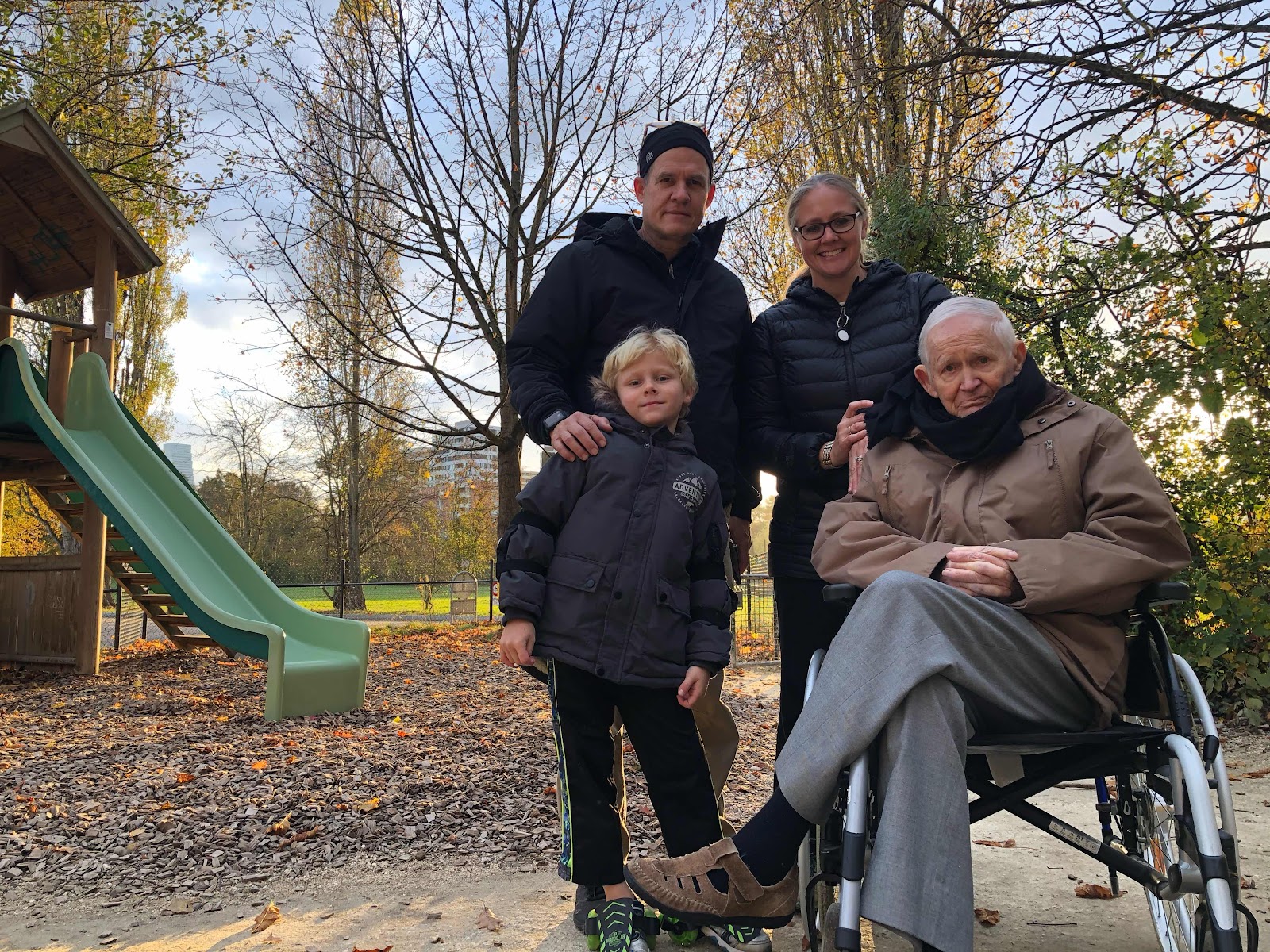


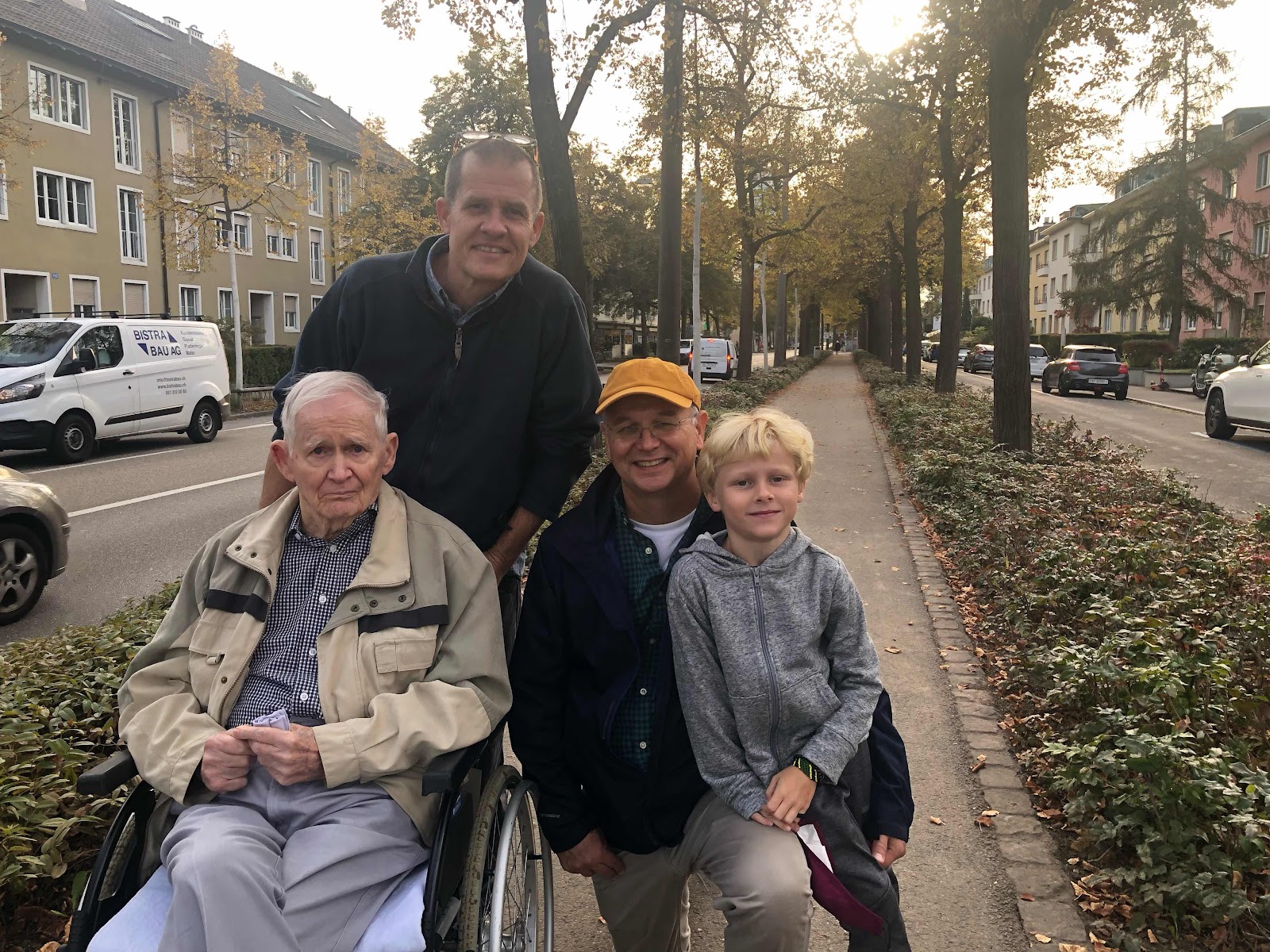
We also had the opportunity to make new friends and connect with old supporters, as well as visit one of our supporting churches. We enjoyed a trip to the countryside to see our friends. They have preserved an old homestead with many original features. There is a fireplace in the middle of their home with ducts leading throughout the house and an oven for cooking. It is fun to imagine how this must have worked to heat the house throughout the cold winters. Now they have a modern heating system that heats the floors. We took a trip to a nearby farm with a variety of species of steer, rabbits, chickens, and crops to support the farm. It was very interesting for us to see a Swiss farm nearby.


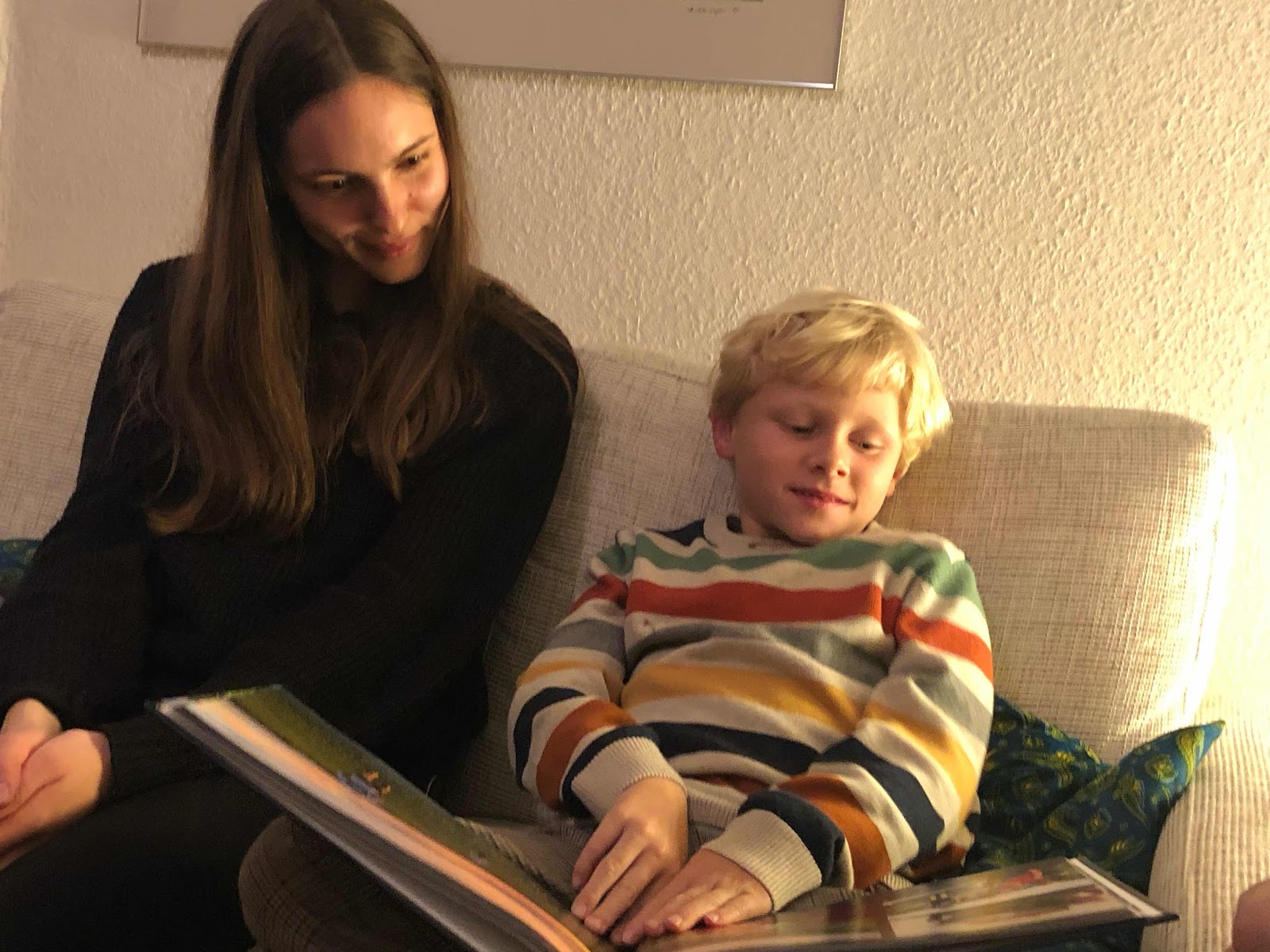
Another highlight was meeting Noemi, a young woman who is a freelance photographer. She has brought awareness and financial support to our work in eastern DRC through her photography workshops. She is a passionate young believer in a very secular country where many churches are closing their doors due to lack of attendance. It was an honor for us to meet her and see her work.
We also connected with Stücklin’s, Ehrsams, Bloms, Fischers, Denise and Raymond, Chinchin, Molly, Reinles, Ferrairas, Hills, and others from Basel Christian Fellowship. We are grateful for the warm reception and kindness shown towards us and our parents Jim and Anita.

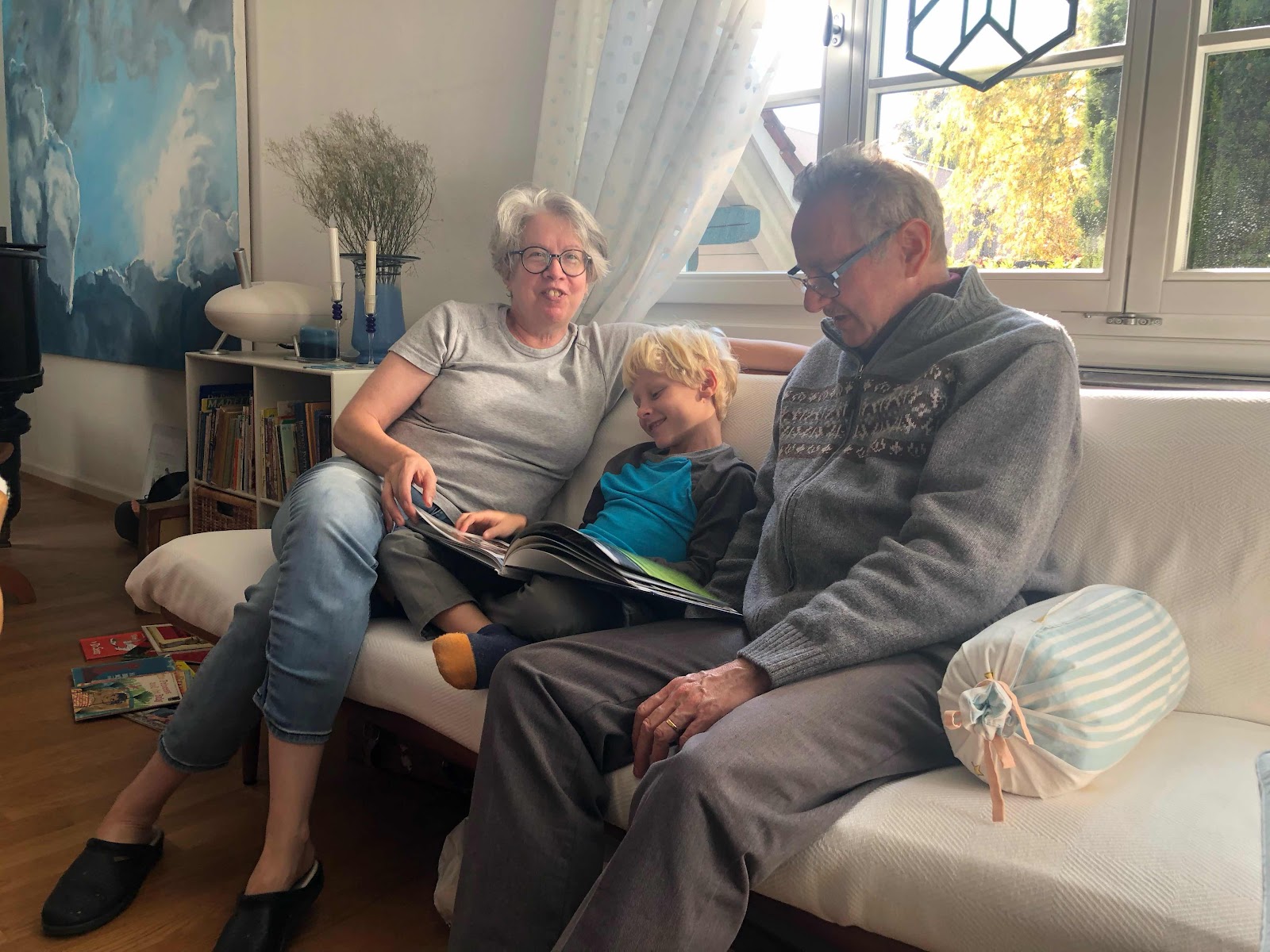

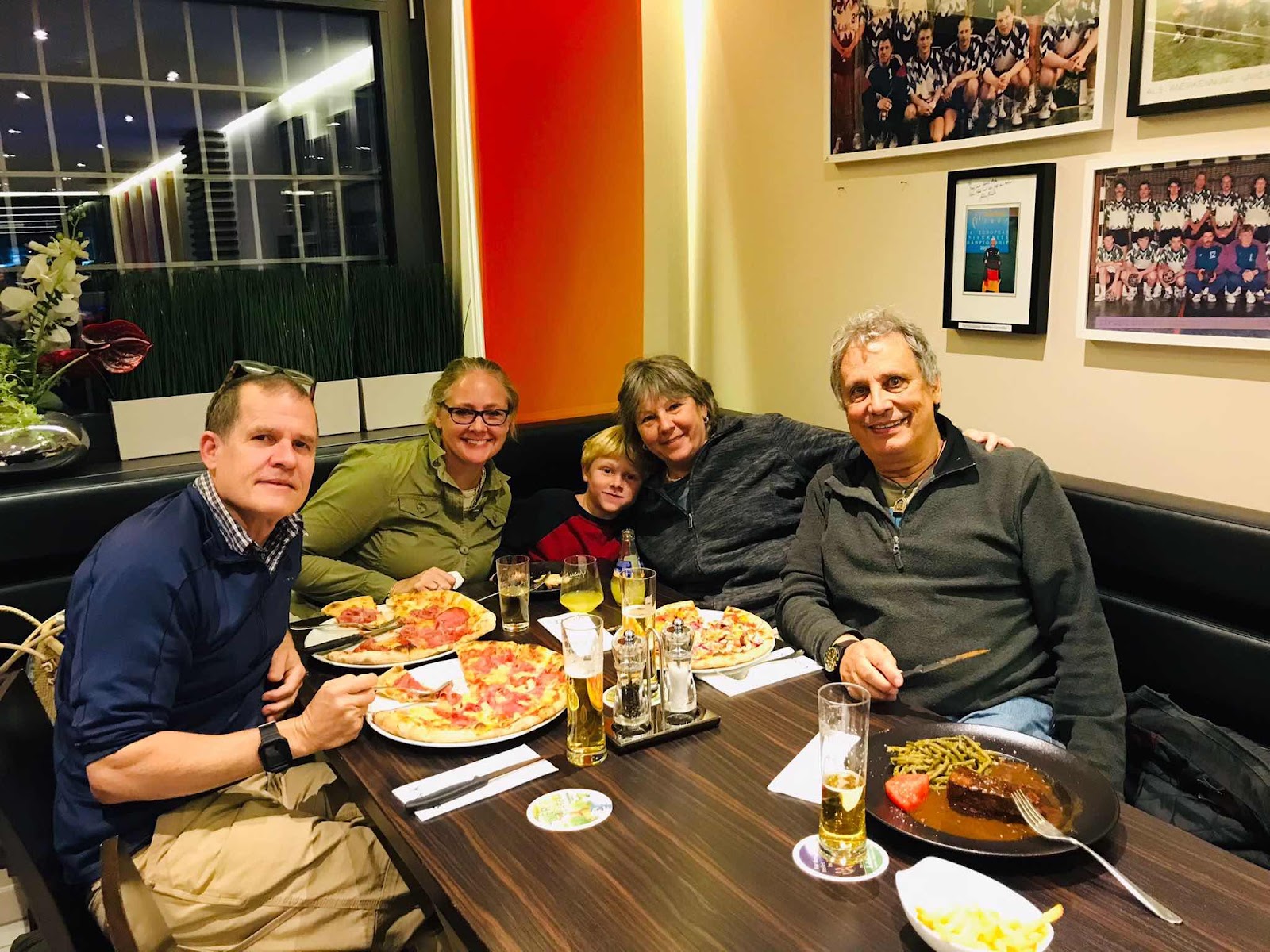

We have had a lot of international trips lately! As Emmanuel made a thankfulness tree for his grandparents, Emmanuel wrote that he was grateful for them and for “planes.” So we are thankful to be back again in Africa. But as usual we will miss family. We treasure the days!
Our Pre-travel Checklist
Traveling is a unique experience, especially across continents and climates. We are always learning new tricks to traveling well. Here is our “two cents”:
-Pack a suitcase within a suitcase to allow for carrying treasured items back to Africa. You know, chocolate and the like.
-Do laundry at least 3 days in advance in case it takes this long to dry! This happened to us during rainy season. We washed our clothes in one village, traveled with wet laundry to the next and attempted to dry again, and finally finished drying in a third city on day of departure.
We don’t have the luxury of a dryer!
-Pack malaria prophylaxis (at least a month) so as to prevent getting sick in another country.
-Pack malaria testing kits and medication in case of sickness. Bring a thermometer.
-Bring basic antibiotics for travelers’ diarrhea, pneumonia/ear infection.
-Get COVID Test in plenty of time to travel. Bring home COVID tests in case of sickness.
-Make sure travel VISAs are up to date.
-Travel with collapsible camping chairs and blow up mattresses in case of long layovers (or being stranded). We were stranded in transit once for 4 days.
-Travel with at least one days’ food.
-Travel with multiple SIM cards and different currencies if crossing international borders. Assume you may have to purchase flights in cash and plan accordingly.
-Travel with bungee cords to tie suitcases together if there are no luggage carts.
-Bring roller skates for young child to provide amusement for long layovers/efficient movement.
-Bring warm clothes if traveling to cold climate, ie shoes, hat, gloves, jacket, wool socks.
I like to think that we are good travelers and are prepared for most things. I used to travel with a life jacket for our son in case of over water travel in Africa…if that isn’t funny!
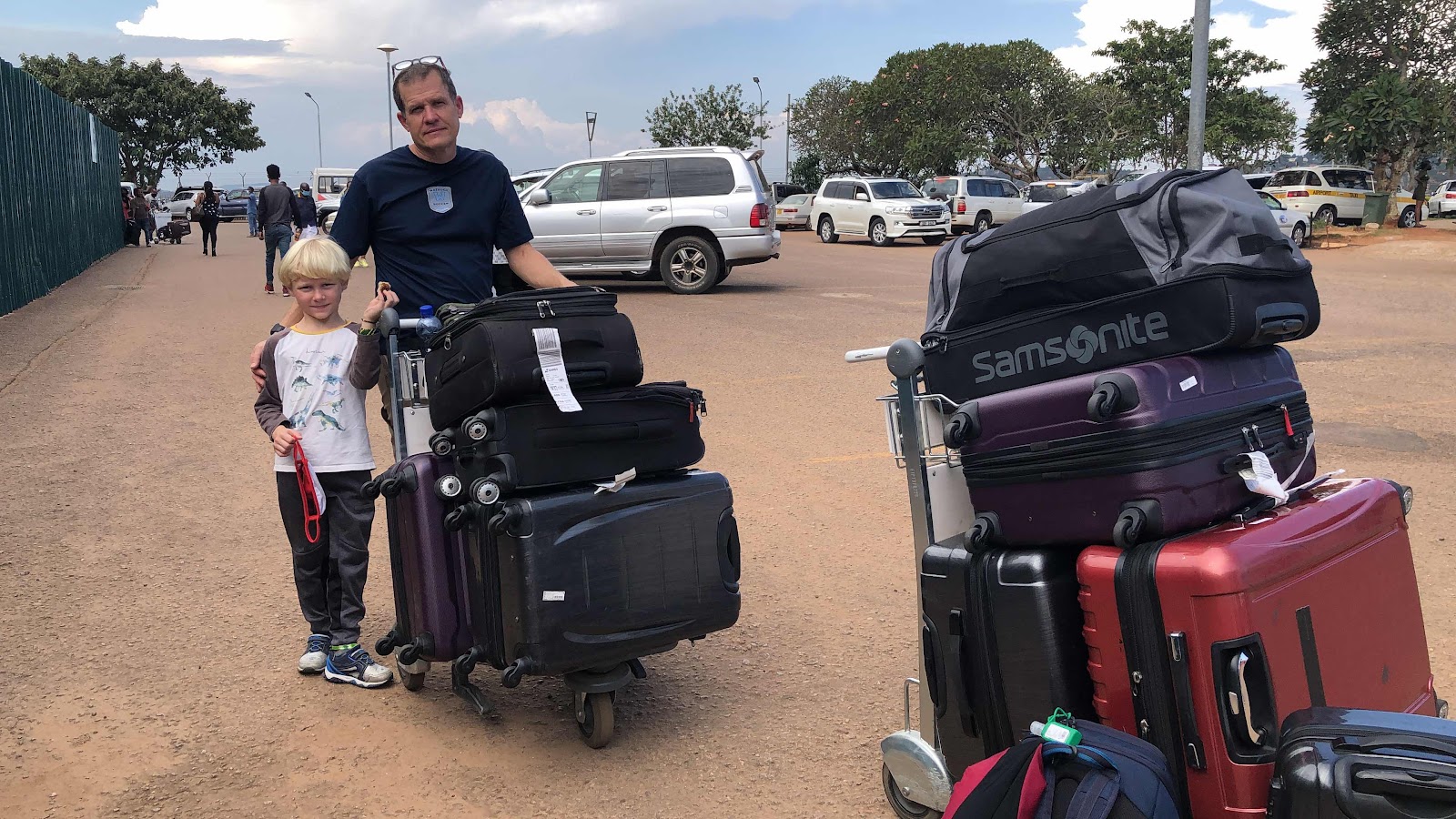
Back in Africa
So now we are back in Aru- homeschooling Emmanuel and seeing patients at the hospital. Our home is literally a stone’s throw from the hospital. We are continuing to work in partnership with Nyankunde Hospital. Over the last 3 months Nyankunde has seen an alarming number of neonatal deaths and birth complications. Many women arrive to the hospital with prolonged or obstructed labor. There is a delay simply due to distance traveled or insecure areas. I am working together with administration on plans to create an antenatal care unit for women. The goal is to have a place they can come for prenatal care and birth preparation to hopefully prevent complications before they occur. We are hopeful that plans will go forward to meet this acute need.
We are still learning how we can help patient care in the Aru area. It is peaceful here and for that we are grateful! The language and people groups in this part of Ituri are completely different than the Bunia region so we are re-learning greetings, etc, but medicine doesn’t change too much.
Using our spiritual gifts
The message from this morning’s hospital meeting was about the importance of using our spiritual gifts to build up the body of Christ. The goal is UNITY in the faith and in the knowledge of the Son of God, attaining some kind of fullness. “It was he who gave some to be apostles, some to be prophets, some to be evangelists, and some to be pastors and teachers to prepare God’s people for acts of service.” Ephesians 4:11-14. It is not about one particular gift, but about everyone using what God has apportioned to him to the benefit of others. It really is a beautiful picture of how God intends for us to live full and abundant lives. If there are things that are keeping us from using our spiritual gifts: conflict, discouragement, particular difficulties we ought to address this quickly for the good of others. It is as if the health of our body is at risk if one of the members is not well. In medicine we have been given a gift of healing which is mentioned elsewhere as a spiritual gift. It is our hope that we can use it to benefit as many people as possible to live abundant lives while on this earth.
Thank you for following our adventures and walk of faith on this side of the earth. We appreciate your prayers and support as we adjust to life and serve!

Lindsey (for us)

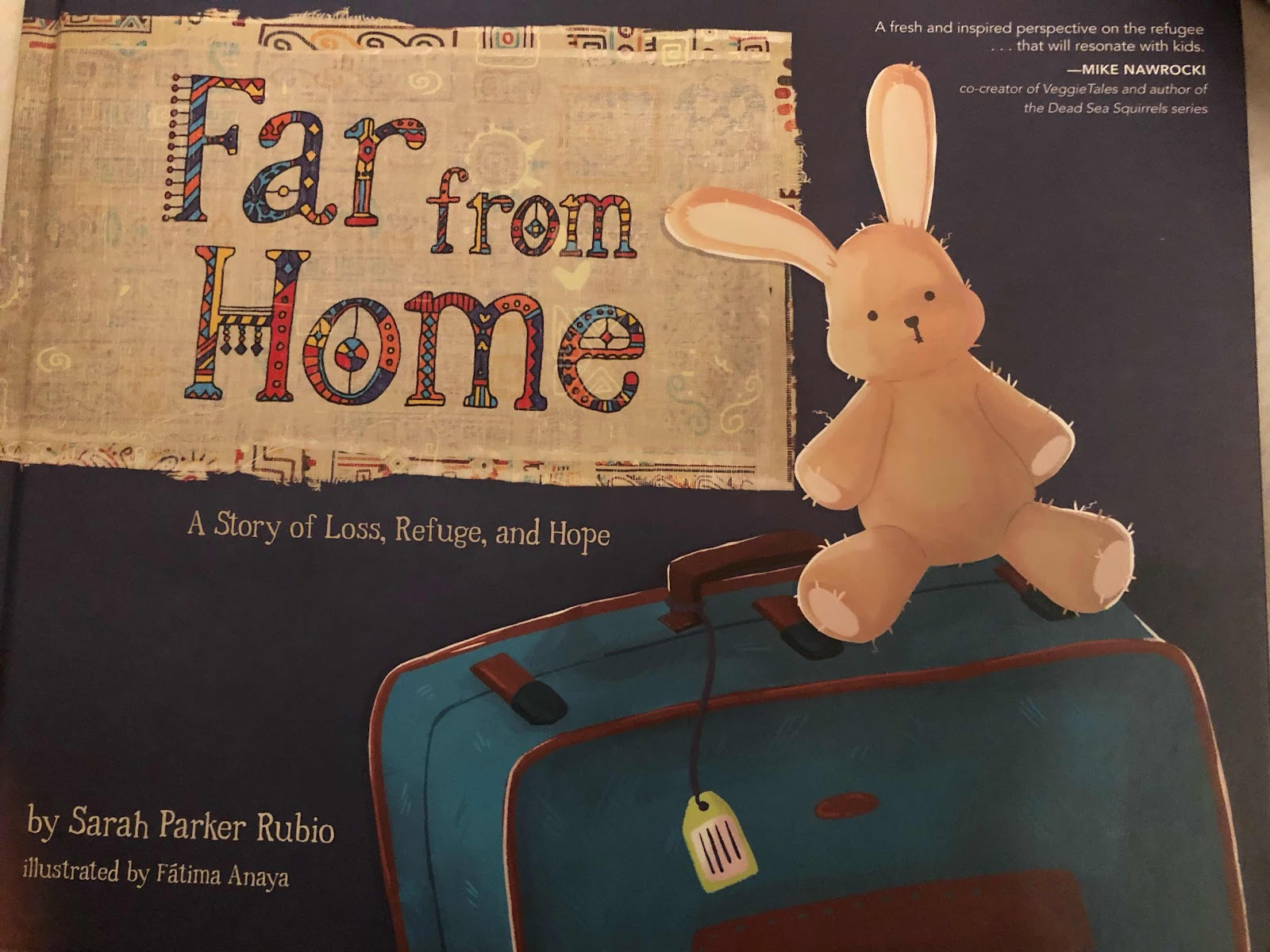
A book I strongly recommend for a child in today’s world: Far From Home by Sarah Parker Rubio. It is about having to leave home, becoming a refugee, and learning a new life. Emmanuel loves it! Each child’s story is different, but many children can relate to this in some way.