Sunday, April 25, 2021

We had to leave Nyankunde

So it’s been a week since we fled Nyankunde. I have not written about the experience, mostly because I didn’t know what to say.  Most importantly, we are fine.  We are safe.  I am in Bunia.  Lindsey and Emmanuel are in Aru, and plan to travel to Adi tomorrow. This is in the Northeastern corner of the country. It is a safe and calm place to be.  


Things in Nyankunde had been heating up for a while. The military presence had become more visible.  There had been skirmishes with the militia.  Without getting into all the details, things got dramatically worse.  We endured several days of heavy fighting in and around the town.  The population panicked and fled to any location that seemed “safer”.  At one point we had around 50 people huddled in our living room.  When there was a lull, they simply disappeared into the countryside.  


The interesting thing about such an experience is simply how little you know what is going on.  Rumors fly around, but there are few hard facts.  All you know for sure is sounds.  Little booms, big booms, closer and further away. You hear single shots, and bursts...and you wonder what they can be possibly shooting at!  At a certain point you head for the shower and hunker down.  At several points I heard bullets whizzing over, but at no point did I see a person firing a gun!  I don’t know how many were killed or injured. I don’t know who “won”.  All I know for sure is that they used a lot of bullets.  


Lindsey and Emmanuel did great under the circumstances. It was stressful. My impulse is always to try to be reassuring.  “Things are fine.  It’s still far enough away.”  Keep a calm voice and demeanor.  At a certain point it just doesn’t seem to work. What worked for Emmanuel was simply to let him watch videos on the iPad.  At one point he figured this out.  He could hear gunfire in the distance and would say “I’m scared...I think I need to watch a movie.”  It is hard to describe the emotions you feel in such an event.  There is a very visceral reaction to the sound of close gunfire.  Frankly it is terrifying. We also felt our  hearts breaking for the suffering of the people. 


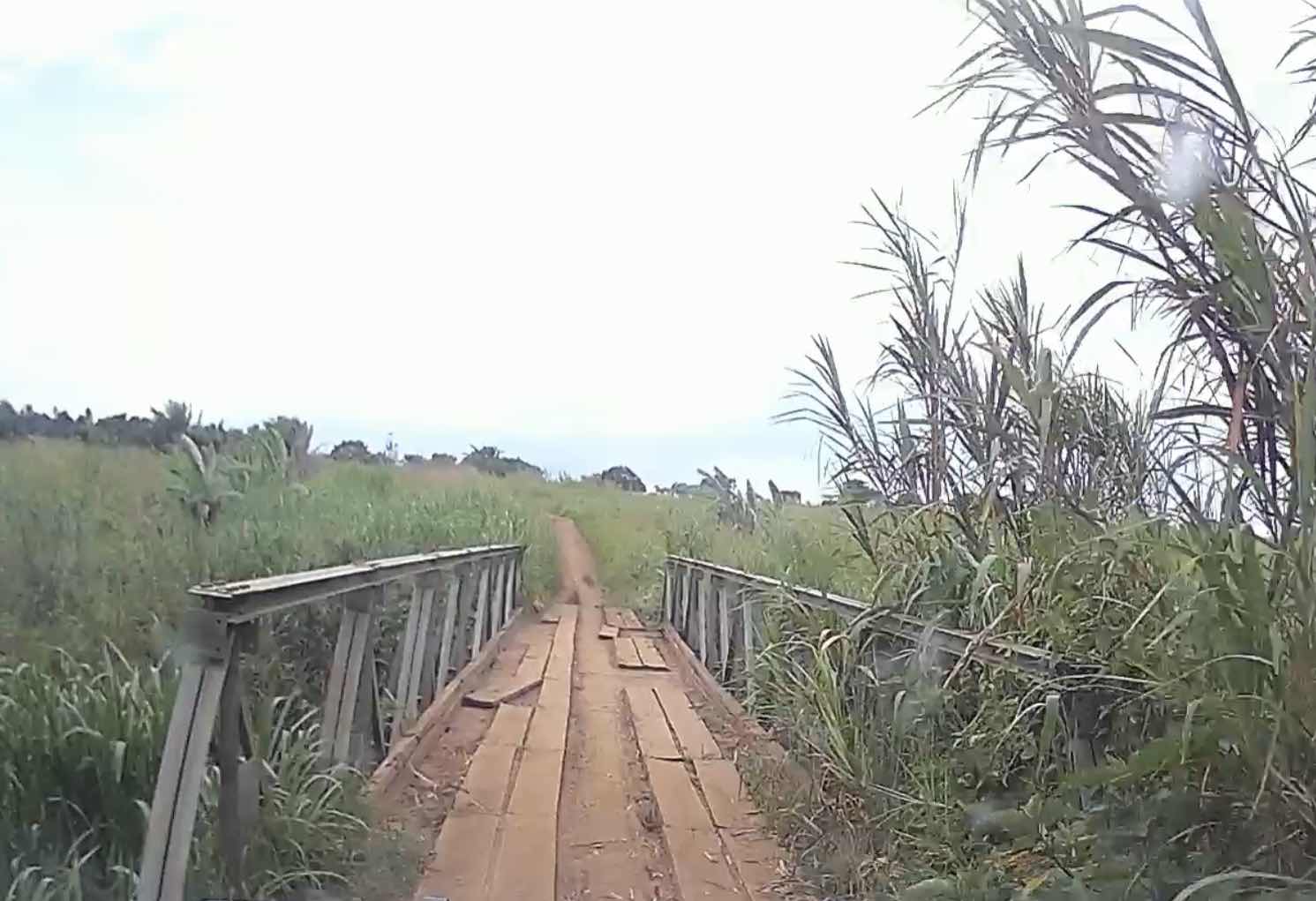
We stuck it out for a while, hoping that things would settle down.  On Sunday, the noise of fighting and the large explosions had intensified.  It was pretty clear that it was time to leave.  When there was a lull, we put our bags in the car and drove out.  We stopped at MAF and we learned that they had made the same decision to evacuate their staff, planes and vehicles.  We drove down the airstrip and took the shortcut that leads out to the main road.  This shortcut is a path that I usually run in the morning.  It is a little path which goes over a small bridge, through a little village, over another little river and up to the main road.  It effectively took us well away from the region of conflict.  Everything went well, until we crossed the bridge. At this point we were met by a group of militia.  It was a ragtag group of young men.  There were around 30 of them and they looked like they were headed into battle.  Lindsey and Emmanuel crouched down.  I started waving, smiling, and giving them the thumbs up.  I told them that I couldn’t stop, and they let me drive past.  We turned onto the main road and drove towards Bunia. 

So much has happened in the past week, that it’s hard to reconstruct it.  We initially attempted to arrange some sort of UN cooperation to evacuate the remaining staff from the hospital.  This was not successful.  Perhaps there are situations in which the UN peacekeepers might protect the staff of a hospital, but this was not one of them.  In the meantime, the hospital continued to function.  They treated a number of wounded militia and provided medical care to civilians and the patients who remained.  I am intensely proud to say that the hospital never shut, never ceased to care for people and is still functioning today.  They find themselves in a region which is now controlled by the militia. We do not know what the future holds, but the fighting has died down.  We are hopeful that some sort of negotiations might be possible. 


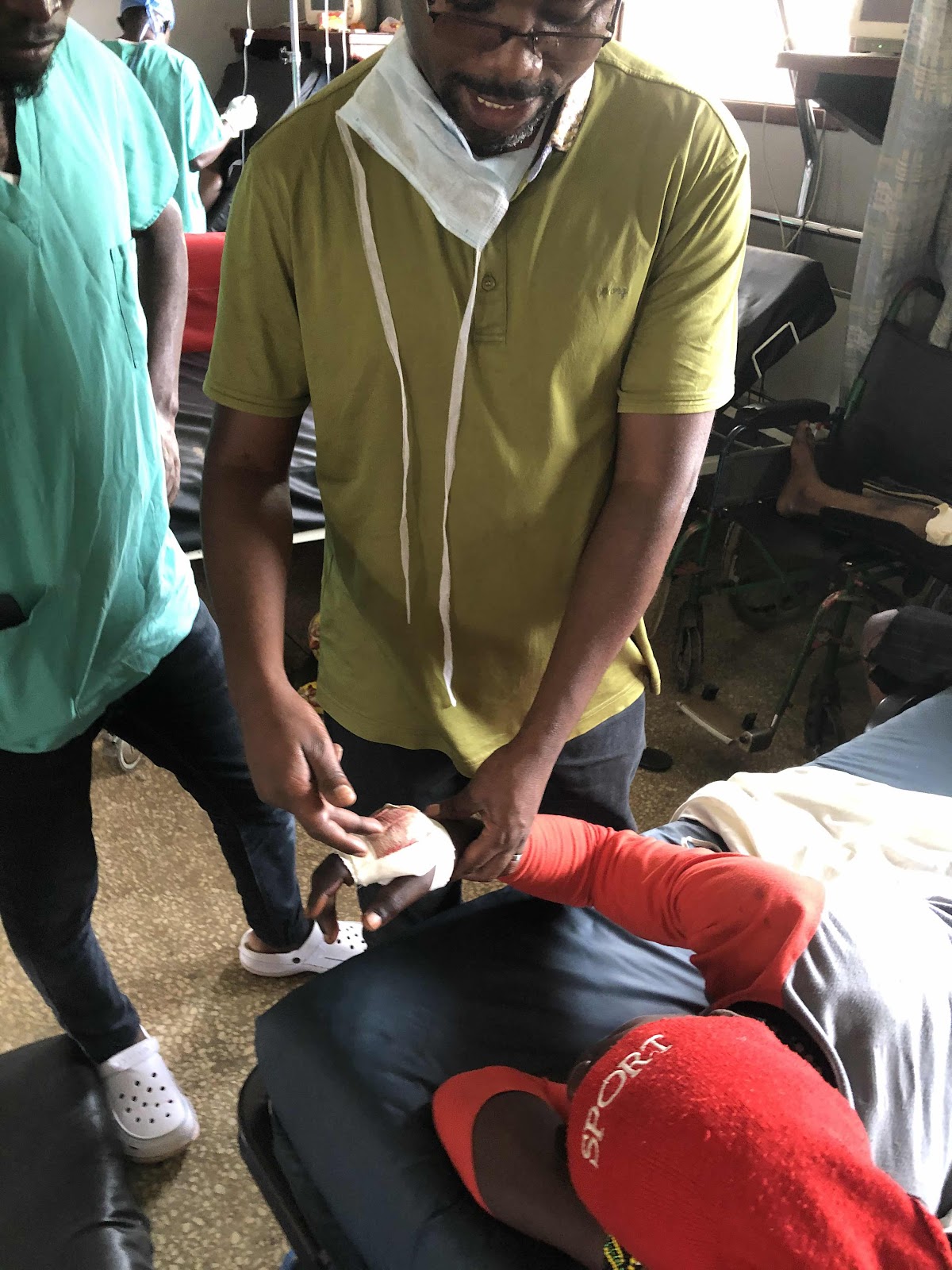
I have made two trips back and forth to Nyankunde. On the first trip we brought food and supplies.  I operated on two patients with grave injuries.  Since then one has died.  I went up to our house and retrieved our parrot. He was a bit unsettled but seemed ok.  I managed to get him in the cage and put it in the car.  The dog was nowhere to be found. I recovered some of the more valuable hospital equipment and left without incident. 
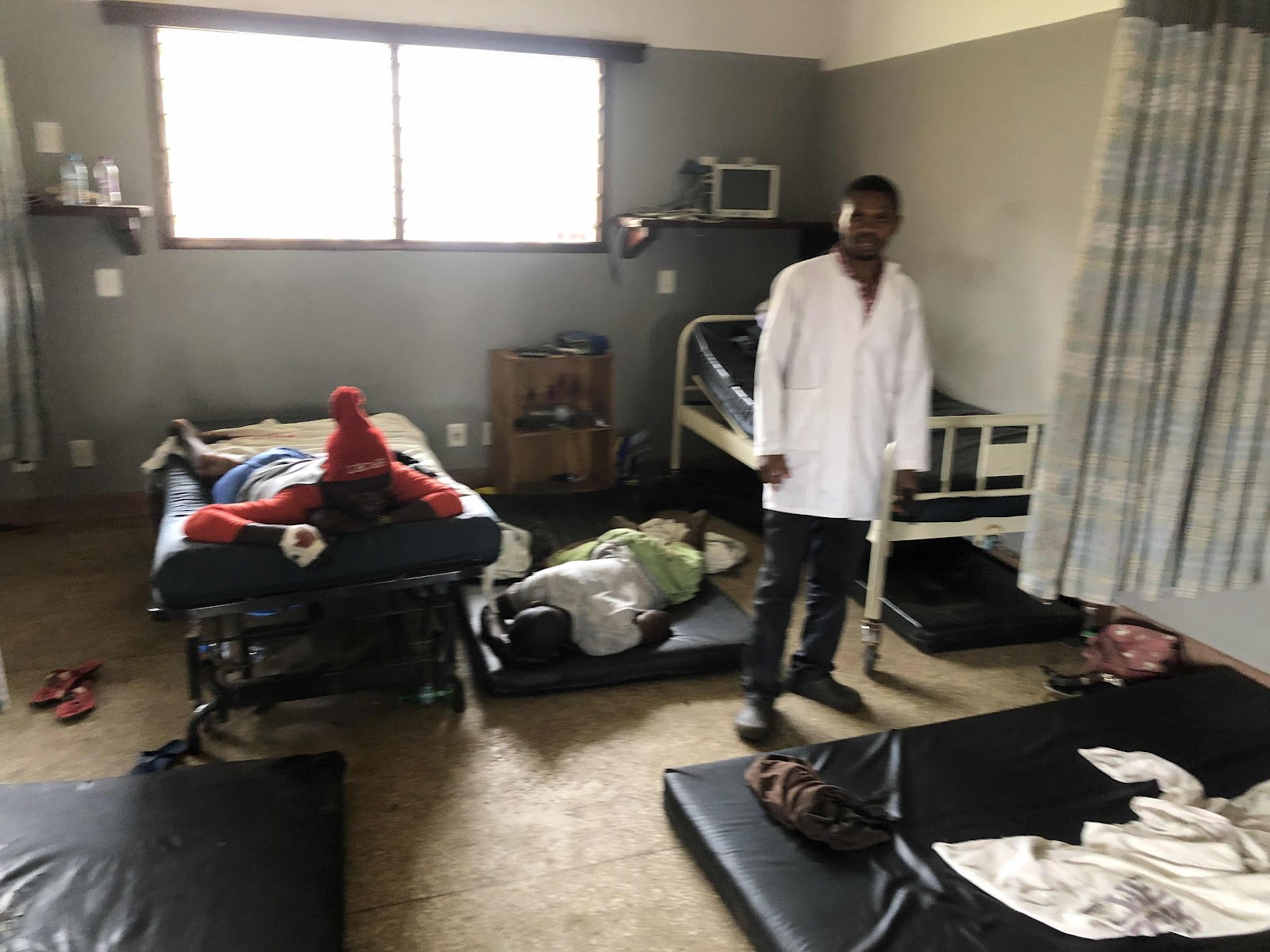


The next day I took Lindsey, Emanuel and the Stafford family to the airport. They flew to Aru and will soon travel to Adi. After what they had been through, it seemed better to get them to a peaceful place.  Bunia itself is also a kind of chaotic place these days. In the afternoon, I went around pleading for assistance. This paid off big. I was able to get an emergency medical “kit” from the ICRC.  This was 19 boxes of the basic supplies we would need to keep the hospital running. I also spoke with Samaritan’s Purse, who generously contributed food and fuel.  I was able to leave the next day with a Land Cruiser full of essential supplies.  
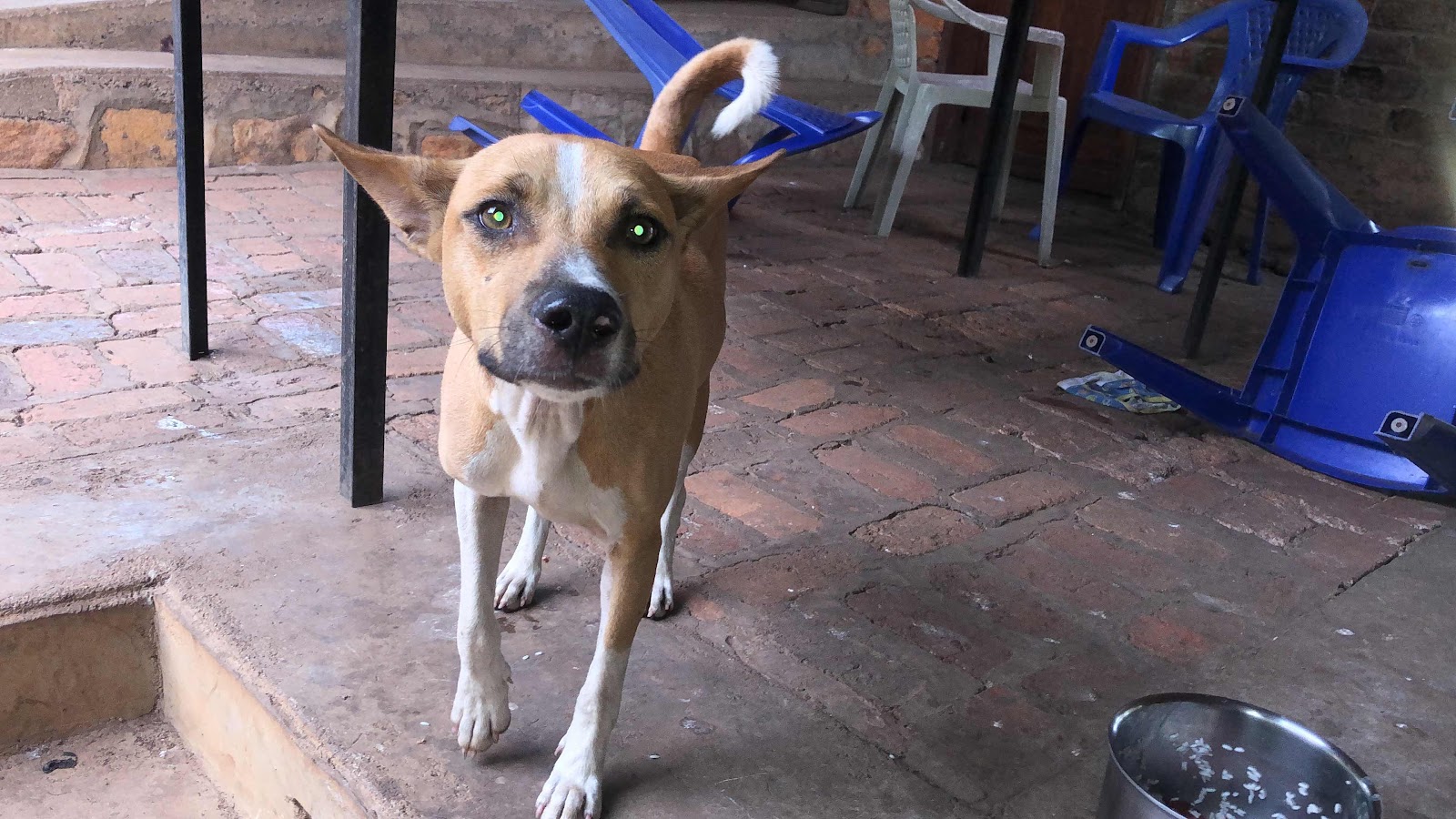


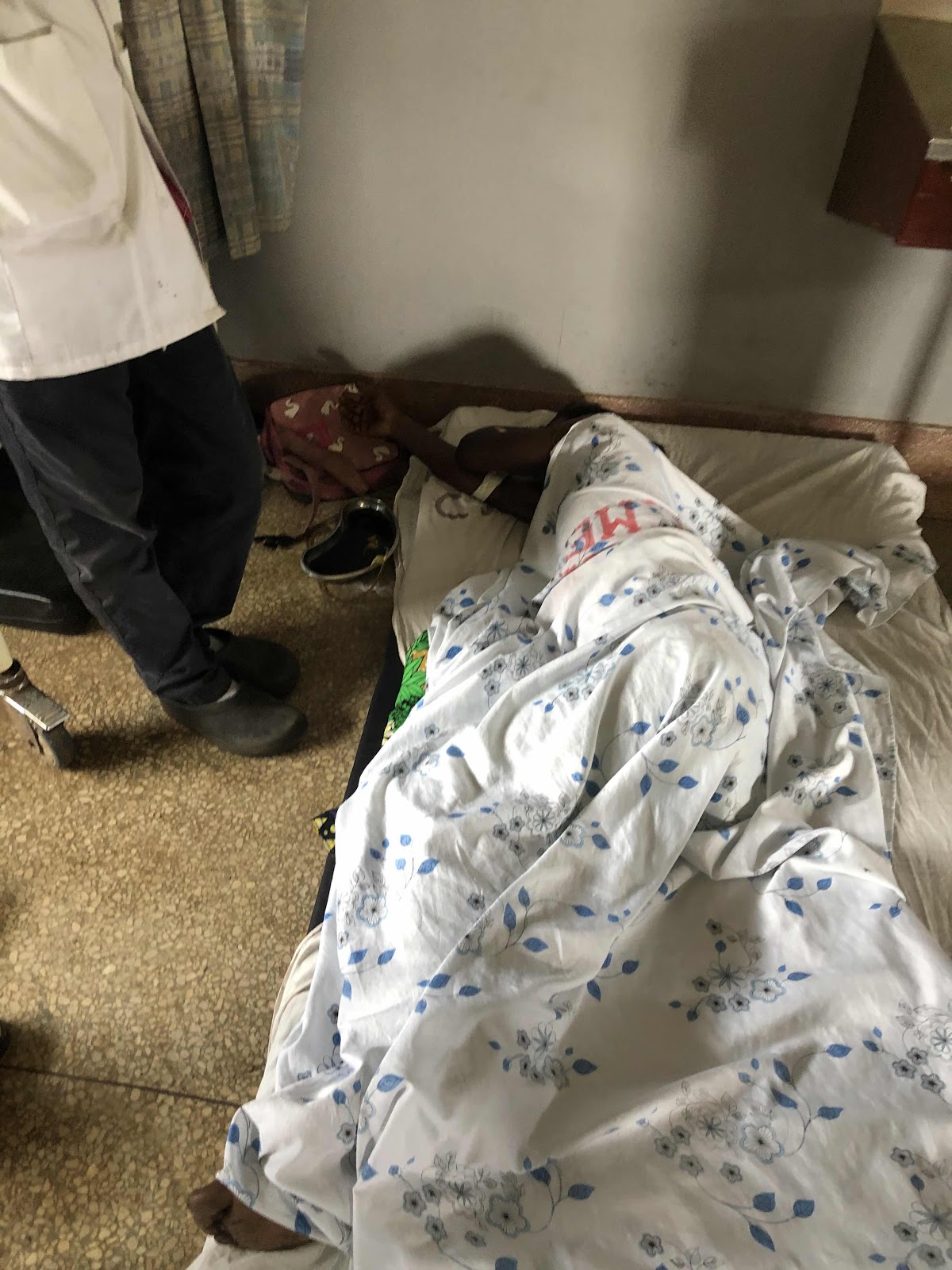
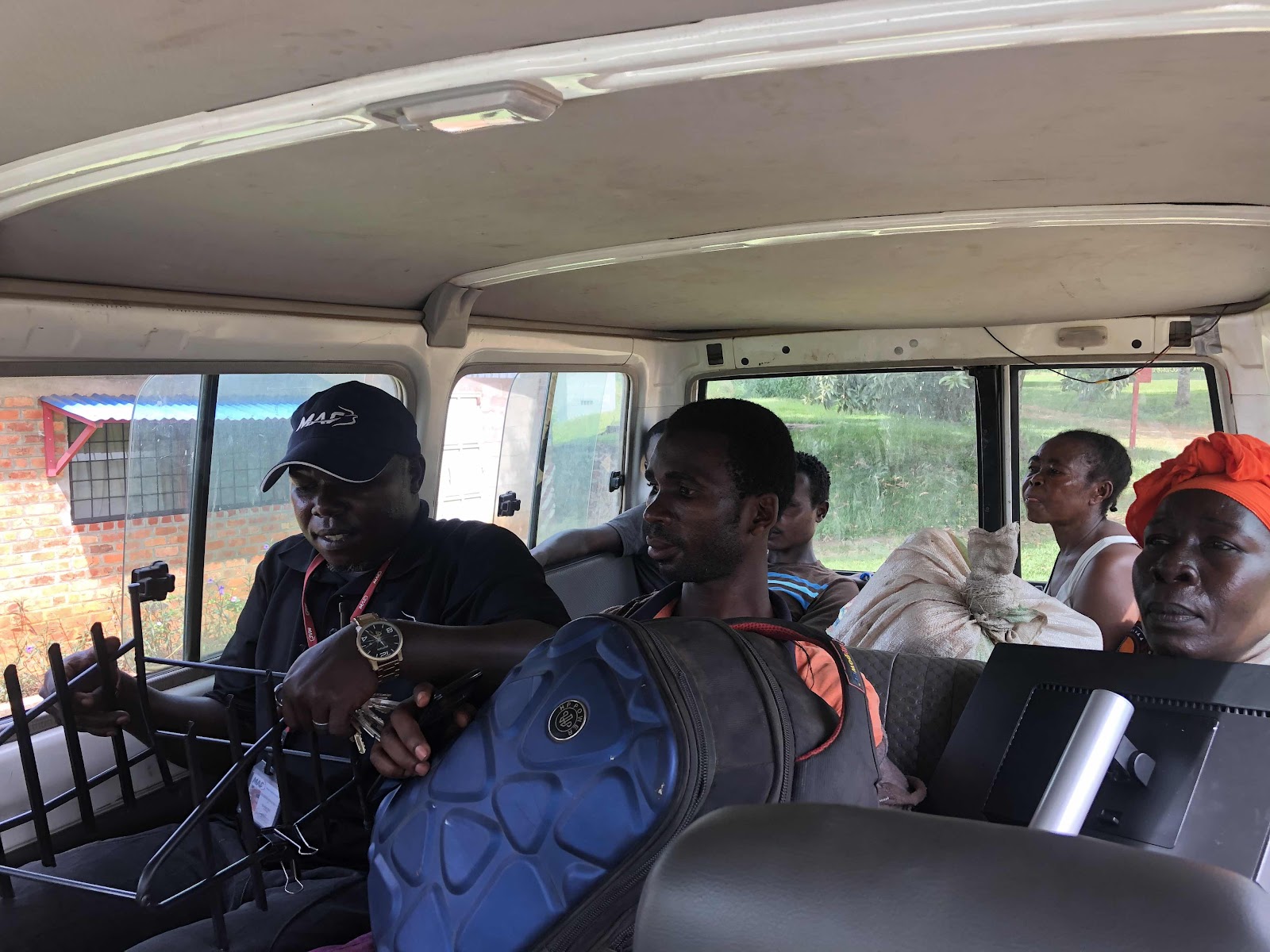
The next day I went back to Nyankunde. This time I did not hear any gunfire or explosions. It actually seemed quite peaceful. I rounded with the doctor who stayed behind.  I helped them to sterilize some instruments.  No one is interested in learning how the autoclave works, until you don’t have anyone else to run it!  Luckily I was very familiar with it. I went around to various houses, trying to retrieve valuable items which had been left behind.  At our house, I was met by our dog, looking a bit worse for the wear, but alive and VERY happy to see me.  Turns out this dog really does not like the sound of gunfire. I got him into a cage which I secured to the roof rack. We loaded up the care with patients and caretakers who wished to leave. We stopped by MAF to get some valuables, and drove back to Bunia. The hardest thing of the trip, by far, was that one of the patients had a broken leg.  He was in agony for the entire trip and each bump of the road resulted in moaning.  There are a lot of bumps in that road.  Despite trying to go as slowly and gently as I possibly could, it was an agonizing experience for everyone in the vehicle. 

Anyway, that’s more or less the situation. I am hoping to go back tomorrow. The situation is calmer and I desperately want to help the hospital to continue to function.  By the grace of God and the courage of the staff who stayed, this hospital is still functioning.  A sense of normalcy is returning. It is not possible to predict what will happen in the coming days, but I pray and hope and believe that we will return and continue to serve.


Tuesday, April 6, 2021

Troubles of Childbirth

April 6, 2021


Maternity 


This is a serious post from a heartbroken pediatrician.  I know the statistics: neonatal deaths account for 40% of deaths in children <5years of life.  Most neonatal deaths occur at home within the first 28days of life, especially in Sub-Saharan Africa and Southeast Asia.  Midwives are critical in decreasing death rates.  Check, check, and check.  Now what can we actually DO in a low-resource area with insecurity, to really make a difference?


Imagine that you simply did not have access to prenatal care as a first-time mother.  Imagine now that you feared for your safety to simply travel 10km to get help.  You go into labor at home, at night, without a midwife, an epidural, or a birth plan.  Labor does not progress and you are in severe pain, unable to walk.  You can’t travel at night due to insecurity.  The next morning the baby is not moving and you travel by motorcycle to the nearest referral hospital.  The nurses receive you with care and compassion, but the baby doesn’t have a heartbeat.  


We see this almost EVERYDAY!  Many babies are dying before they have a chance to be born in OUR HEALTH ZONE!  We are seeing the reality of women coming to the hospital with obstructed labor and babies in distress or already dead.  If the hospital doesn’t respond in a timely way(and even if they do), we see babies die in our hospital as well.  These last few months our Nyankunde Hospital’s maternity department saw upwards of 10 fetal deaths.  In previous years the number of fetal deaths was 1-2/month, so this current crisis is truly a public health emergency.


Insecurity and violence have long-standing effects on a community.  There are obvious sequelae of violence: death, displacement, children don’t attend school, families break apart, roads close, and people sell/move valuables.  Then there are less obvious effects of violence:  negligence of children, psychological trauma, not to mention the inability to farm rural areas, and lack of access to health care.  Violence always affects the most vulnerable among us:  pregnant women and children.  


At present there are only 4 of 12 health centers functioning for prenatal care and uncomplicated deliveries in our health zone.  The other 8 health centers are closed due to insecurity.  This means that women are probably not getting any prenatal care.  Many of them are going into labor and delivering at home because they come from insecure areas.  Women are not traveling due to insecurity of the roads and they simply are not arriving in time.  Babies are dying at home.  


This is the worst that I have seen fetal and neonatal mortality since we arrived in 2013.  It is sad.  We have decided that it is time to re-open a ward for antenatal care from insecure areas around Nyankunde.  The facilities aren’t much to speak of, but adequate.  It is a room close to the maternity ward with beds, mattresses, mosquito nets, and access to clean water and washrooms.  Ideally women with higher risk pregnancies would come 2-3weeks prior to delivery, as well as first-time mothers, women with repeat caesarian sections, or women from insecure areas lacking a midwife.  We plan to consult these antenatal cases when they arrive 2-3 weeks prior to delivery.  We will be making public health radio announcements welcoming women from these outlying areas with little/no access to care, first-time mothers, and anyone who needs a safe place to live for the weeks preceding delivery.  We may need to use the hospital vehicle to pick up these women on certain days at disclosed locations.  These women will need to be promptly evaluated and determine what their needs are.  There is a precedence for this kind of intervention in this area, but we have no idea what the community response will be.  The response could be tremendous. 


-Pray for us as we see the breakdown of insecurity in our area, to not lose HOPE for the future.  

-Pray for our maternity department as they desperately need more experienced nurses.  We have lost a lot of good nurses due to insecurity and decreased salaries.

-Pray for the physicians working with pregnant women in this high risk environment.

-Pray for the message to get out to more isolated areas and for women to be willing to come.  

-Pray that we would find the right support person(s) to support this effort.


Thank you for your interest and support.

Lindsey

Sunday, February 28, 2021

Nyankunde Ultrasound Conference

So, we had the first-ever ultrasound conference at Nyankunde.  Was it a great success? Yes! Would I want to do it again? Maybe after a while. Maybe after I've forgotten how stressful it was, and how much work.


Ultrasound is a passion of mine. Medicine, and surgery in particular, is a challenging undertaking , even in the best of circumstances.  In the US, an arsenal of sophisticated diagnostic tools is available to doctors to figure out what is going on inside.  Radiologists are standing by to interpret the images. Here at Nyankunde, I have very little. But I have Ultrasound!  I use ultrasound every day - but it still blows my mind. How does this machine use sound waves to "look" past the skin and construct a image of what is inside? I kind of understand it, but really I don't. What it means for me is that I have, in my pocket, an X-ray/ CT scanner/ MRI. I can use it to guide procedures and give targeted anesthesia. I work in the bush, under austere conditions, but I don't have to give crappy medical care. I can have a good idea of what's going on in the inside and I can give my patients the care that they deserve. Innovative companies have shrunk down the behemoth, intimidating consoles into a probe that fits in my pocket and plugs into my cell phone. The prices of this technology have shrunk by orders of magnitude, such that this Star Trek Technology exists in the here and now and is within the grasp of a bush-surgeon such as myself.


I remember once having a discussion about what is “appropriate care”.  My definition went something like this.  “Appropriate means that you are giving horrible care, but it’s OK because you are in a horrible place.”  I don’t want to give “appropriate care,” I want to give the very best care I possibly can, and ultrasound plays a central role.  But here’s the thing.  When you take an x-ray, you get a single static image and it requires no great skill to push the button.  Ultrasound is a skill that must be learned and the skilled ultrasonography is a hunter, probing into the dark to answer questions.  “Is there an abscess, a leak, a fracture, a fault?”  It requires an understanding of anatomy, physiology and pathology.  It can be used from the top of the head to tip of the toe, but it is an art.  


OK, I guess I got a bit carried away, but I’m passionate.  We had three goals for the ultrasound conference.  One was overt, but the other two were covert.  The obvious one was to introduce Congolese doctors to more advanced aspects of ultrasound and give them a taste for ways in which this could improve their patient care.  Most of them could take an ultrasound and figure out if there was a baby in there or not, but few could go much further.  The covert goals were to improve the general impression about Nyankunde, to quell the spurious rumors and let the medical community understand that we are still here and open for business.  The other goal was to get to know doctors in the area and to find ways to encourage fellowship and spiritual growth.  


So, we ended up with 16 participants from outside institutions and a few from here.  It was a good, manageable number.  We spent two days going over various ultrasound topics (cardiac, pulmonary, musculoskeletal, trauma, vascular, etc.)  In the mornings we had didactic sessions and in the afternoons we practiced on human volunteers and on one unfortunate goat who made the ultimate sacrifice.  After we had practiced putting in IV catheters and sticking needles, the goat became dinner.  


In the evenings we tried to provide some entertainment.  We had one evening around a bonfire, a talent and game night, a film and a hike up on the ridge to watch the sunset.  We succeeded in generating a little buzz in the media and even scored an article on “Radio Okapi,” including an interview with yours truly.  By the end of event, I was exhausted.  Despite all the challenges, I felt like we succeeded in achieving our goals.


It was interesting to get to know some of the Congolese physicians working in the area.  They are a good lot, but there are some rough edges.  I think that Congolese doctors do not have a understanding of the aspect of ongoing medical education.  They finish medical school, attend an abbreviated and inadequate practical training (six months!) and are unleashed on the population with a notion that they are now doctors and that they know!  Any sort of ongoing education usually consists of seminars concerning the guidelines for the treatment of malaria or tuberculosis.  There are very few opportunities for ongoing training or specialization.  My hope is that we can look for chances to inspire in physicians the desire to learn.  


The limited factor for ultrasound is simply the paucity of decent equipment that is out there.  Many hospitals are using older ultrasound units.  They do not have access to better equipment.  The price point is changing, however.  A very serviceable hand-held portable ultrasound can be had for around 2000$.  (Consider looking up Butterfly IQ on the internet.) This is, of course, still way out of the reach of most Congolese physicians and hospitals.  If I were Bill Gates, I would take a small portion of my massive wealth and work to get portable ultrasound units, along with practical training, in the hands of medical practitioners across Africa.  Obviously, I am not Bill Gates, and what I can do at my level is try to encourage and inspire Congolese doctors to use ultrasound to provide better care for their patients.  Any enthusiastic partners out there are welcome to come alongside me.  


Anyway, the Ultrasound Conference has obviously occupied my mind a bit.  On other fronts, we are doing well.  We have enjoyed a season of calm in the region.  We continue to deal with challenging cases.  This past week we worked on a 2-year old who could not swallow due to a stricture of the esophagus.  This poor child had been basically living on candy, and had the rotten teeth to prove it.  We initially did a gastrostomy tube for feeding.  We encountered some anesthetic issues and nearly lost the child.  This past week we were able to dilate the stricture.  His mother is ecstatic to see him actually eating and drinking.  


The family is doing well.  Emmanuel is learning so much and it is fun to see him reading and writing a bit.  His spelling is very phonetic and it takes a bit of deciphering.  This weekend we enjoyed camping up on the hill.  The “Hill Hut” is more or less complete and it provides a great place to get away.  Our camping gear is up there and all we have to bring is food and water.  


That’s the news from Nyankunde.  Thank for your thoughts, your support and your prayers.  We feel so privileged to serve in this needy place, and it is only possible by our partnership with people like you!

Warren for the Coopers

Sunday, January 31, 2021

Warren finally writes something...

Warren here. It has been a while since I wrote a post on this blog.  Lindsey is better than me at keeping things up to date, but I thought I would add my own two cents.


The big news is that I am no longer the only surgeon at Nyankunde Hospital.  We recently saw the arrival of the Stafford family. He is a General Surgeon and she is OB/GYN.  They have two small kids.  Their arrival was the culmination of a long and circuitous journey, made possible through the Post-Residency Program of Samaritan’s Purse.  This amazing program facilitates the transition from Residency to the mission field.  It takes motivated physicians who feel the call to the mission field and provides them with the support to get there.  We met the Stafford’s several years ago and they expressed to us the call that they felt to come and serve in Congo.  Getting them out here has been like battling the Lernaean Hydra.  With every serpentine head cut off, two seemed to grow in its place.  There was Ebola, Covid, closed borders, political problems, security challenges, housing challenges, etc.  Their journey took them to Switzerland for language study.  The decision was made to send them to Togo.  Now, against all odds and all reasonable advice, they are here!  My approach to recruitment has always been to give visitors every reason not to come, and then see what happens.  I have no intention of trying to convince anyone to come here.  It just doesn’t work well.  Anyway, they are here...and now I can start slacking.  


Having two surgeons will open new horizons.  It is so great to have a young surgeon who is full of energy and ready to teach more patiently than myself.  It will elevate the standard of care and will bring a level of cooperative energy that we have sorely lacked.  Congo is in great need of surgical training.  It has been my prayer for the past decade that perhaps one day we could start a formal surgical training program here.  Having two surgeons is a significant step in that direction and I look forward to seeing what God will do in this place.  


Life in Nyankunde continues on, despite the challenges.  The hospital is in dire financial need and the level of morale is low.  At the present time, we have only two nurses working in the OR and giving anesthesia.  Salaries have not been paid in months.  Due to the security situation we do not have many patients being referred for elective surgery.  We end up doing mostly emergency surgery. This is ok, and is certainly needed, but emergency patients do not pay.  They are generally poor.  They often have complex orthopedic problems which require repeated operations and consume medical resources.  They need blood, but don’t have blood donors.  Many of them are injured as a result of tribal violence.  We do our best to save life and limb, and with every patient the hospitals sinks deeper into a financial hole.  It would be funny if it wasn’t so sad.  If we had a few elective cases such as hernias, prostatectomies, cholecystectomies, it would provide some income for the hospital.  The rumors in Bunia are that Nyankunde is very unsafe and that it is the base of operations of the militia.  These are not exactly true, but the rumors keep paying patients away, often to their own detriment.  


We are doing our best to try to counter these rumors, and help to put a positive face on the hospital.  We are working on several strategies to provide “good press”.  I’ve encouraged our administration to try to think out of the box.  We have recently had a few referrals from the outside which will hopefully help to counteract some of the negative perceptions.  I have a few ideas.  More on that subject to come.  Still, for the moment, it feels like we are in survival mode, or something less.  


Despite everything, we are doing well.  Emmanuel is making tremendous strides in school.  He is starting to read and write.  He is becoming quite the artist.  Favorite subjects are airplanes, sharks, his friends, flying snakes and other mythical beasts.  No Hydras, yet, but we will work on that.  It feels like he is in the process of working out his identity.  What we love most of all is that he is kind.  He is genuinely concerned for others.  We have to stop him from giving away all his toys.  Having a child grow up is a chance to once again experience all of the joys and sorrows of childhood that we all went through but perhaps forgot.  It is not always easy, but it is so great, and so much fun.  Lindsey is busy treating kids, planting things, harvesting soy, hosting, and basically running the household.  We are in the dry season, and we both love it.  It has its downsides; the heat, the dust, the ever-present burning, but we love the sunshine and the ability to be outside.  The sunsets are fabulous.  


,


I am, of course, never without a project of some sort.  My recent one was the construction of the “Hill Hut”.  Behind our house is a steep hill with a little winding path.  On our forays we discovered the ruins of a little hut.  It is around 7x7 feet, and is located on the top of a hill that commands nearly 360 degrees of incredible views.  Apparently it was once used for communications.  It has been in ruin for the past 30 or 40 years, far as I can tell.  Most of the foundation, the floor and about 1/2 of the walls were intact.  It seemed completely logical to me that we renovate this little hut as a destination to camp and watch the sunrise, the stars and the sunset.  With a brisk clip, it takes 15 minutes to get from our house to the hut.  It made sense until we starting carrying sand, cement, bricks and water up that steep trail.  I hired a team and they made innumerable trips up and down the hill.  It was exhausting. I bought a metal door and window and we constructed the walls around these.  We carried up lumber, roofing material, nails, tools, a ladder etc.  In the beginning Lindsey thought I was crazy.  By the end I was convinced that she was right.  These “little” projects always take more time, money and effort than I would have ever imagined.  But now it’s finished, and it is marvelous.  A 15 minute hike seems to take us to the top of the world.  There is always a cool breeze and I sit up there in a camp chair and watch the sun go down.  Something about a being on the top of a mountain with a great view just does something calming to my mind.  This little endeavor is probably cementing the notion in the population that the white man has gone off the deep end, but I don’t care.  If it provides a fun way to experience the outdoors, and gives me a sense of peace and closeness to God...it’s worth it.  We should all have ridiculous projects from time to time.  


If you made it this far, we reward you with a few prayer request.

Peace in our region
Adjustment of Stafford Family
Financial situation of the hospital
A time of refreshment and renewal for our family

Warren, for the Coopers