October 23, 2021
We made it back to eastern Congo again. Our first couple of weeks were spent getting settled in Aru, north of the Nyankunde area. We will be assisting Ania Hospital with education and health care and hopefully other hospitals as well. We are thankful for the warm welcome we received by the German mission Diguna and the staff of Ania Hospital.


Hearing again
We recently had an opportunity to visit Nyankunde for a few days. Going back was a sensory experience with something that had become unfamiliar. We left under such abnormal circumstances and these were my last memories, of gunfire followed by deafening silence. Our last experiences were of fear and flight. I wasn’t sure what we would observe or what our experience would be.


Upon landing I was pleasantly surprised by signs of life returning to the village-like the sounds of spring . The first thing I noticed was the birds singing and the insects making noise! It was magnificent. War chases away the natural world and the silence is deafening. Everything was green, grasses longer than usual, not quite so many fields planted, even a cow or two. Mud, lots of mud. People were milling around everywhere on footpaths and in front of the hospital. Refugees sitting around cooking fires, just sitting, waiting, talking. The atmosphere was that of a refuge. This is such a contrasts from the absence of people, especially children, and quiet in the months leading up to our evacuation from Nyankunde in April.
When I asked people “how do you feel being here?” I most often got the answer, we feel mostly at ease. People were thankful for their fields which still yielded crops, thankful for each other, thankful to be in their homes again. Many people added comments like, “it is passed, in life you have to move on, keep going.” Children were going to school again. There was some semblance of normalcy.
Now I know that it is not as simple as “it is passed.” There was huge issues still, tribal in nature, but people want to live in their homeland.
I woke up to the sound of a bird I had never heard before, a complex melodic song. It sang for maybe 15 minutes and then another species of bird started. How lovely it was! Our home was much the same as we left it and we were thankful to see our dog and parrot again.
Our guesthouse was full of refugees again, this time from Komanda where there was a recent militant attack. It is the third wave of people we have welcomed there for an extended period of time. We are thankful to have the space for them to live and cook outside. There is running water and electricity which are a huge blessing. It is a reminded to count my blessings.
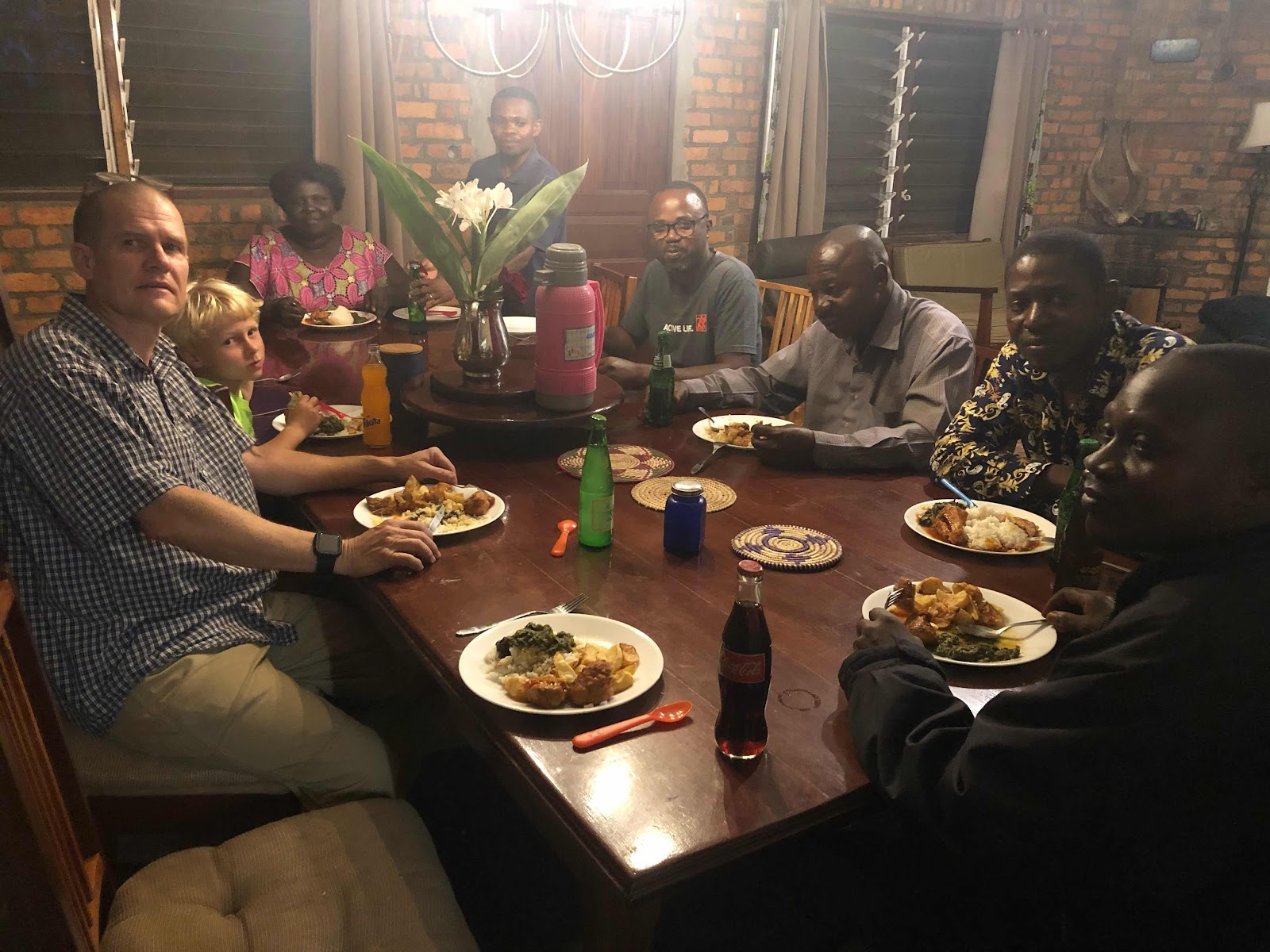
We found many old friends and colleagues living courageously-this was the greatest joy of all. Even Emmanuel’s friends are back and met up with him again. There was a lot of tree climbing!

Resilience
Resilience is a property of materials/metals that describes their ability to hold their shape after being deformed. Google provided the following definition: “the ability of a substance or object to spring back into shape; elasticity.” Not all materials are resilient though. Some materials are resilient but over time the material becomes weakened and can not recover its original shape.
Resilience is also a word that refers to person’s ability to withstand enormous stress and hardship without falling apart-even more to carry on. Resilience is a positive attribute to bestow on someone. The word can mean “the capacity to recover quickly from difficulties; toughness.” It is a quality that keeps missionaries on the field and allows people to overcome tremendous difficulties.
I believe that Congolese people are very resilient. They have to be to survive. Our muscles can become stronger with right training, but they can also become weak and easily injured by repeated misuse. The Congolese are weakened by continued stresses of life, of insecurity. It may seem like everything is all right, until the next stress comes. It is more difficult to function. The hidden cracks had not been tested by new weights and the cracks grow wider. Repeated stresses can cause damage to a person’s ability to function psychologically. Anger and even violence, or deep depression can surface. Where is this breaking point? I am not sure.
I do believe that God is able to comfort and heal from tremendous difficulties and despair. We need each other. We need space to mourn and acknowledge loss. It is not about becoming tougher and overcoming something. It is more about inviting God into it, because only He can handle these deep waters.
We live by the grace of God
One afternoon a group of Sunday school kids came to our home and fields to work to earn funds to have new choir uniforms made. What a blessing to see them working together, all different ages. How happy they were! You see their uniforms were pillaged during the recent conflict. Now they will have beautiful new ones. Afterwards they held choir practice in the backyard. I was touched by the song they sang called “We live by the grace of God.” As I looked from face to face, I saw children with serious expressions. Life has been difficult for these children. It occurred to me that probably every single one of them fled the recent violence. They had fled gunfire into the bush. Many slept by rivers, without any belongings, and perhaps not even shoes. They had all experienced hunger at one point of another, fear, and hopelessness. And here they were singing this truth, “We live by the grace of God.” The context of their life experiences makes these words all the more powerful.

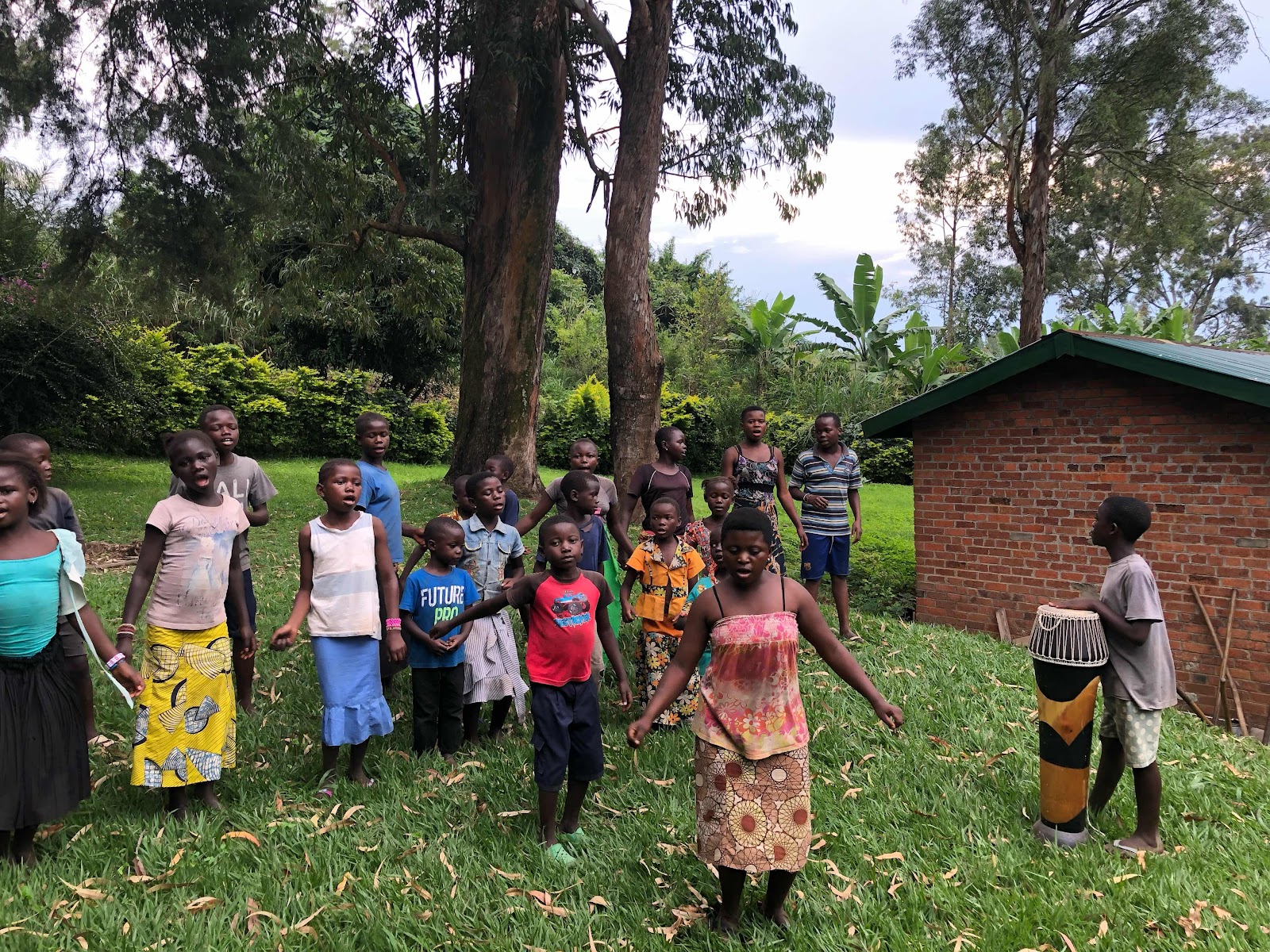
It is my prayer that these children will experience hope again and know how incredibly beloved they are by God. Life has dealt them a difficult hand lately. Oh God show your grace and love towards these children.
Displacement
It was a strange experience after we evacuated to visit a new community in Congo and introduce myself as someone displaced by war. It is not common I guess for a foreigner to be “displaced.” It was very humbling to not have a home and depend on others to help you with food and lodging, the practical aspects of life. I think returning to the USA after this happened was important for us to feel grounded again, not as refugees.
So many Iturians have been displaced. No one really knows the actual statistics, but I think it is upwards of 1/5 persons. Ituri Province has more IDPs than anywhere else in the world. So many of these refugees do not live in official camps, so is hard to know their numbers. Our little community of Nyankunde (populations 10,000 previously) has received thousands of refugees over the last couple of years, always in waves. They come, they stay for a while, they work to survive, and they return. At some point they accept the risk of returning home.
We are experiencing another wave of refugees at present due to an extremist group operating to the southwest of us. I will limit my comments, but ask you to please pray and educate yourself about Ituri Province. There is a dark destructive spirit which threatens our Province.
Land is part of a person’s identity
In the Western world, many of us live, more or less disconnected from the land and the food it yields. There is often not a relationship between people and the land they inhabit. There is an Old Testament proverb which wisely says, “Plant your fields before building your house.” People live in close relationship to the land here in Congo. Fields are directly related to people’s livelihood and therefore identity as a people. We grow peanuts, soybeans, corn, squash, and coffee mostly. We do not depend on this exclusively for food or income for food. We do it to appreciate the land, to give needed work, and to learn ourselves a bit about agriculture. It is incredibly hard work!


As we flew over the troubled Ituri region around Bunia I noticed that many areas with arable land had not been planted. Also the land was away from people’s homes. Farming was not happening as much around rivers. All of this is a generalization. Curiously much of these areas are conflict zones, gold mining areas. As we moved out of these conflict areas we then saw parcels of land closer to people’s homes and larger groupings of homes. I keep coming back to how living well seems directly related to being able to have fields, and/or having animals nearby.
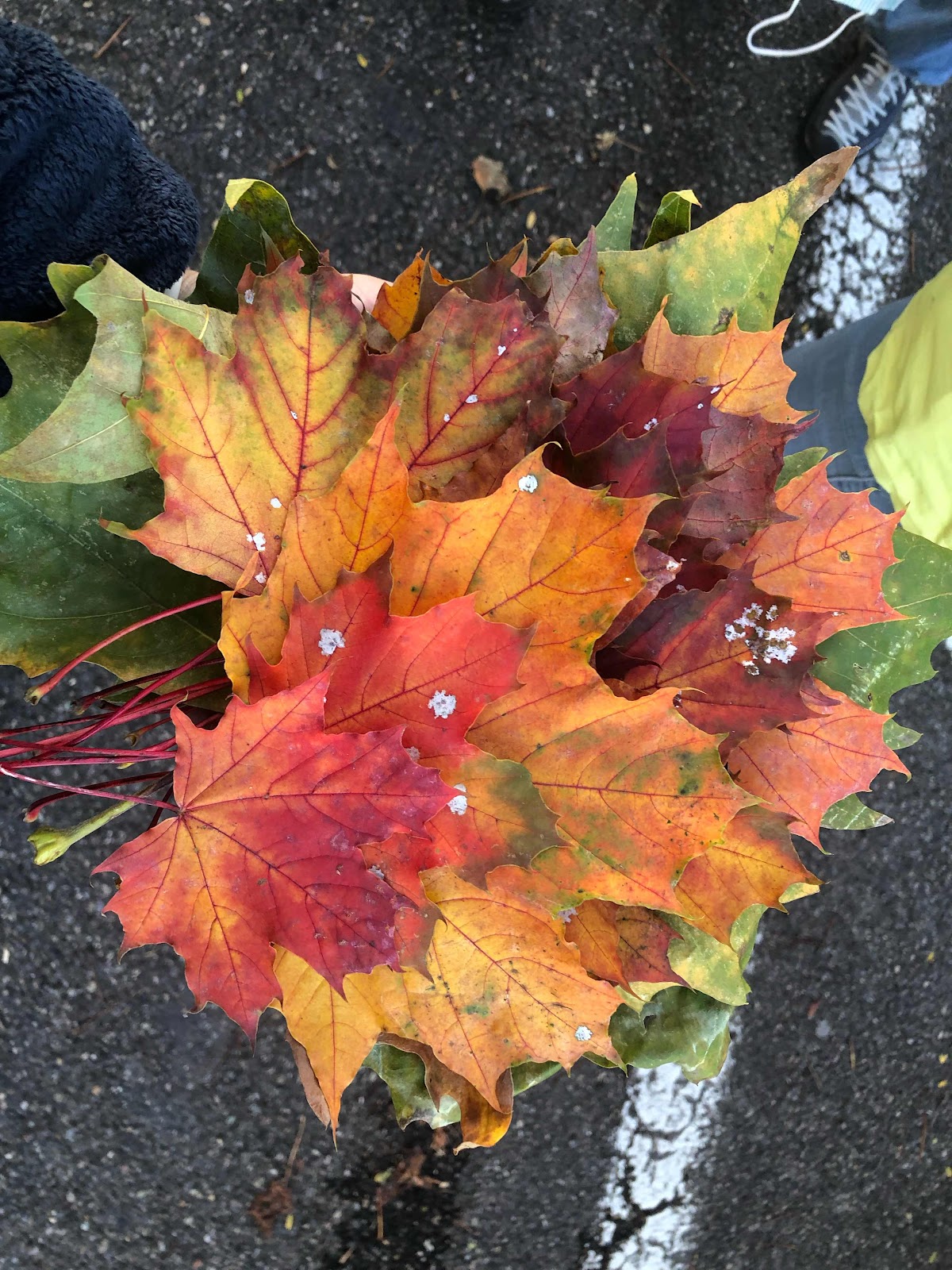
Thank you for your prayers as we pay a short visit to Warren’s family in Switzerland. His stepmother had a recent fall and his father needs increasing assistance with life activities. It is a blessing to be here to reconnect with them and help in whatever way we can. We are enjoying cheese, chocolate, and the radiant fall colors and crisp days!
Blessings,
Lindsey for us




No comments:
Post a Comment