Fall Break Away
November 11, 2024.
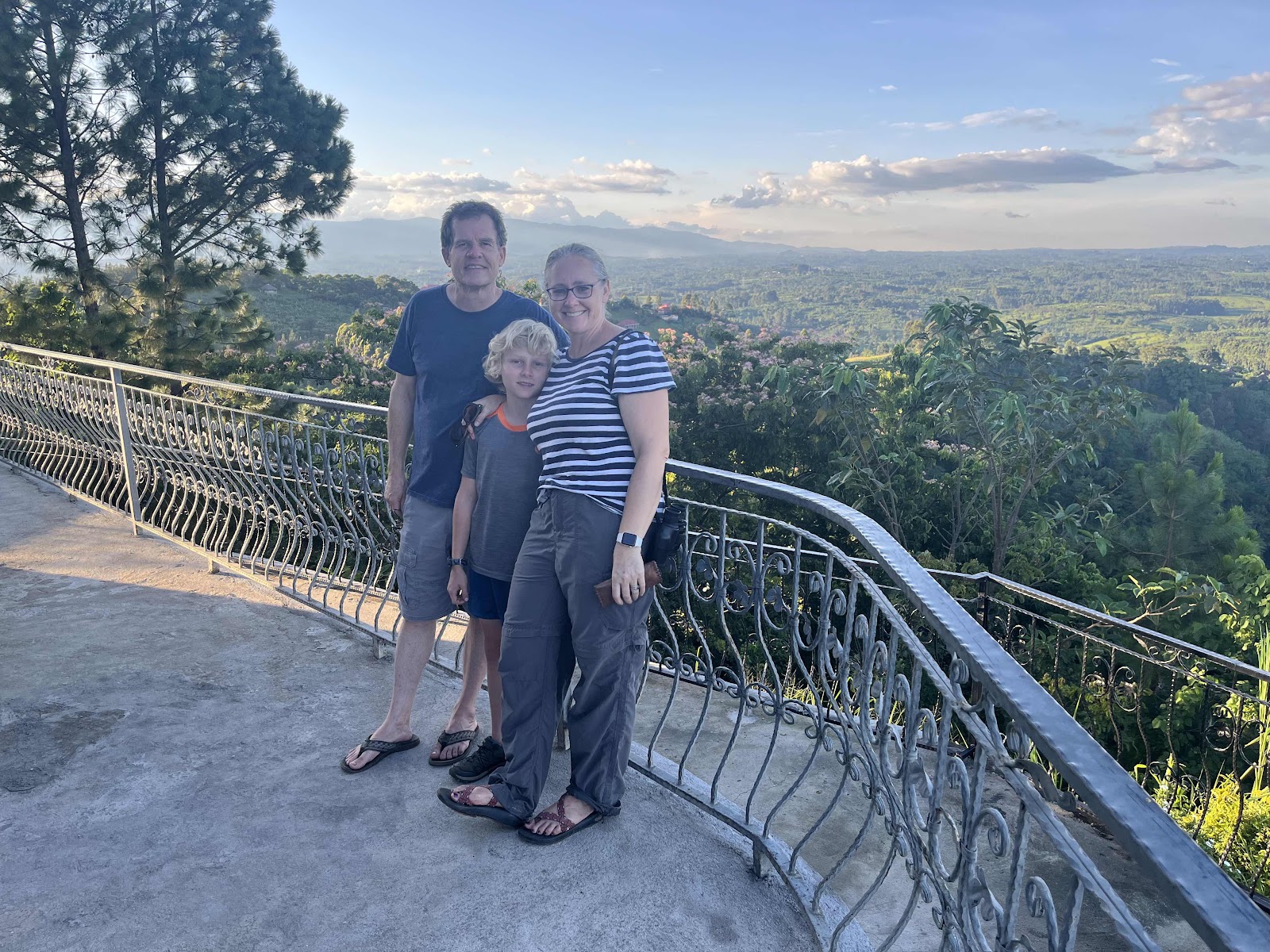
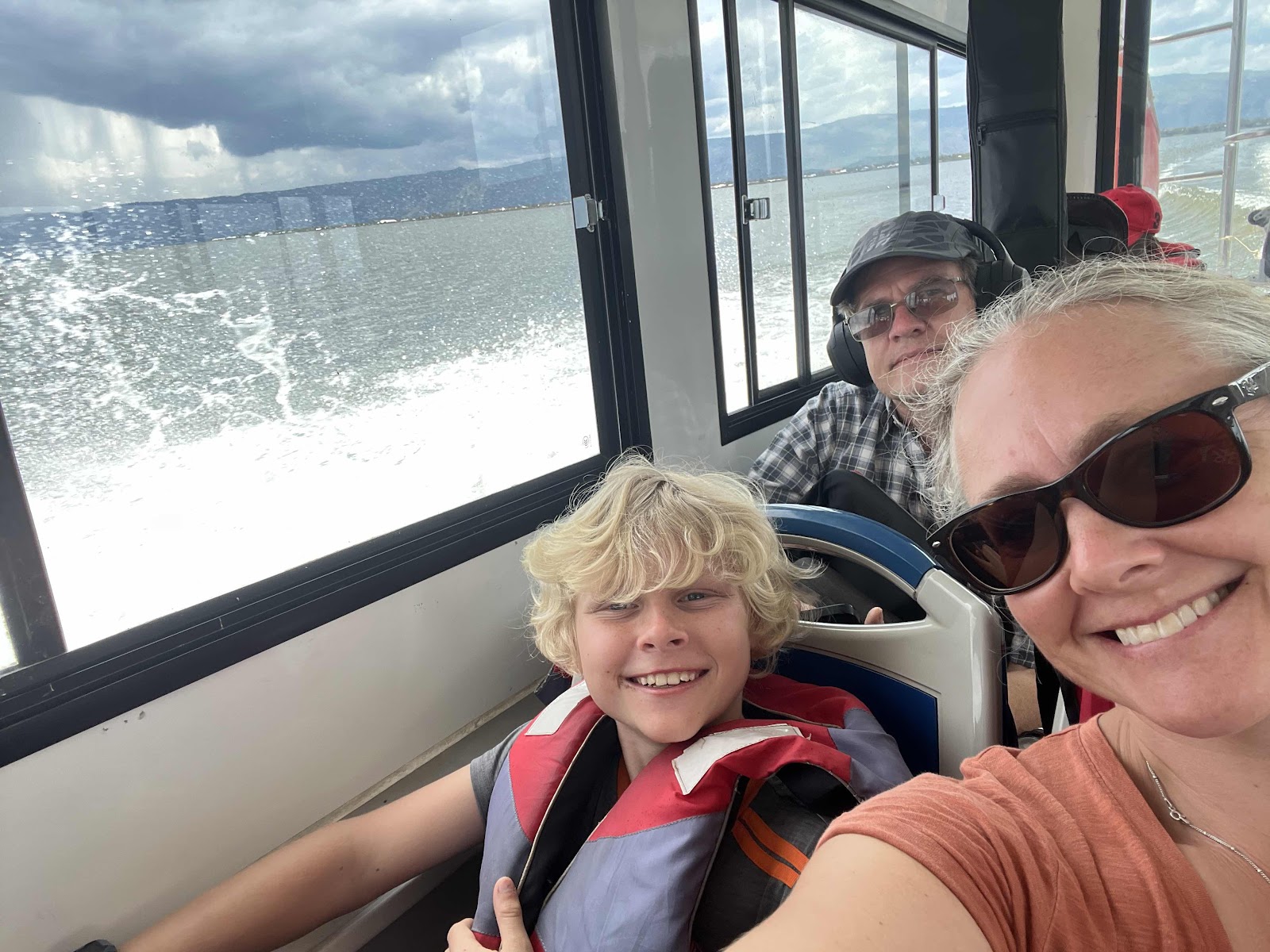
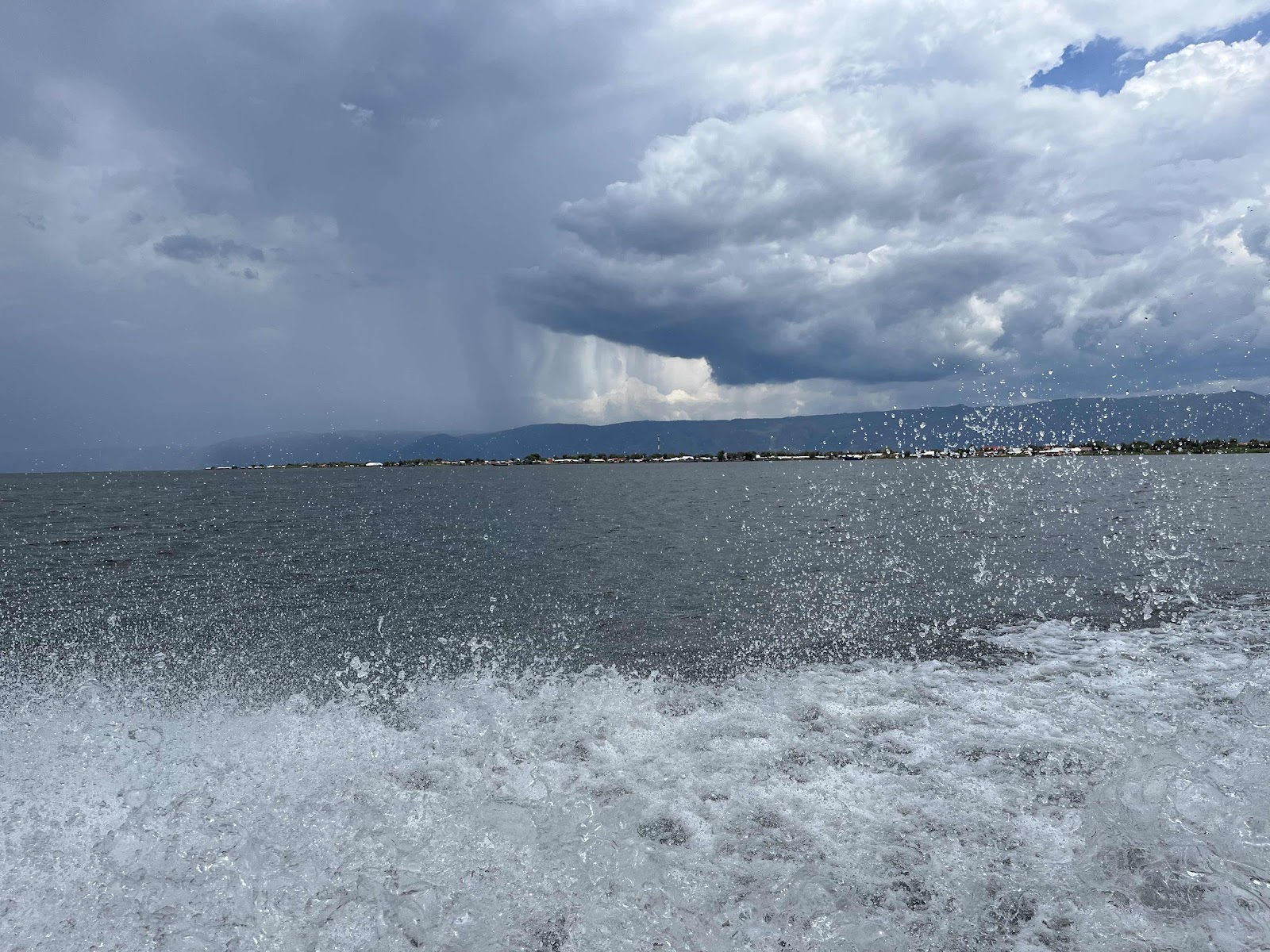
Travel in Africa takes motivation and time! Our fall break was spent in the Rwenzori region of western Uganda…but not without a little effort on our part. First we had to travel over a bumpy road down the escarpment and cross Lake Albert, one of the African great lakes. Now there is a speed ferry that is available which shortens the trip significantly from 3-4hours to 1-1.5hours. It is a beautiful journey with green cliffs on either side-men standing on long sturdy wooden fishing boats pulling in nets or transport boats moving goods across the lake. You can watch a storm coming >100km away while the sun beams down on the peaceful waves while you sit and take it in. The trip brings back memories. We first entered DRC by the lake border crossing 12years ago when there wasn’t regular service across the lake…one had to hire a pirogue, or jump on a fishing or tug boat. There was no way to predict when the boat would be available and one would wait for hours in the blazing African sun. Years later, you can feel the wind in your face from a speedboat in an assigned seat, wearing a life preserver. WOW! We used to travel with our own life preservers. Even though the journey is tiring it seems like a privilege to be able to travel.
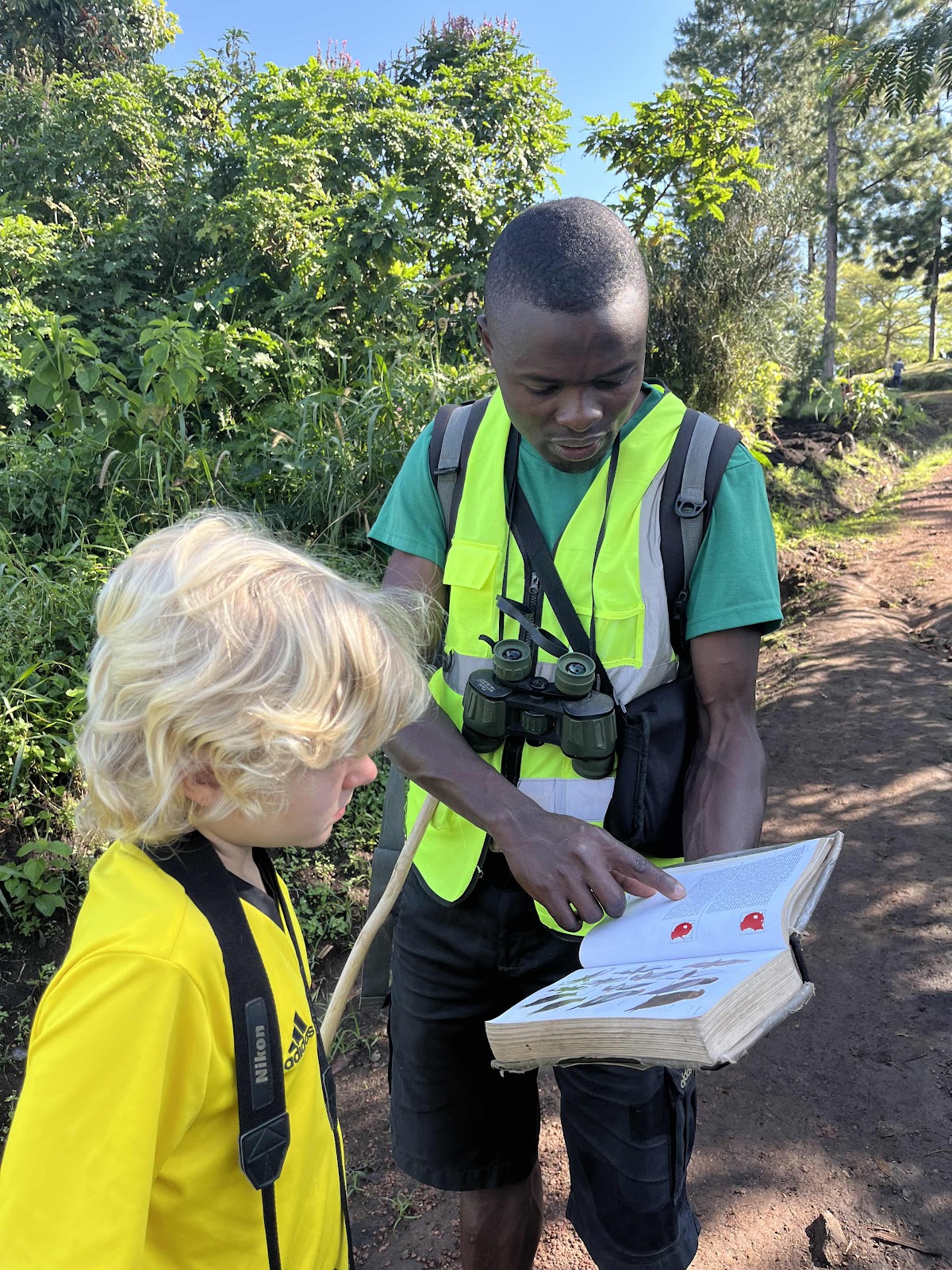
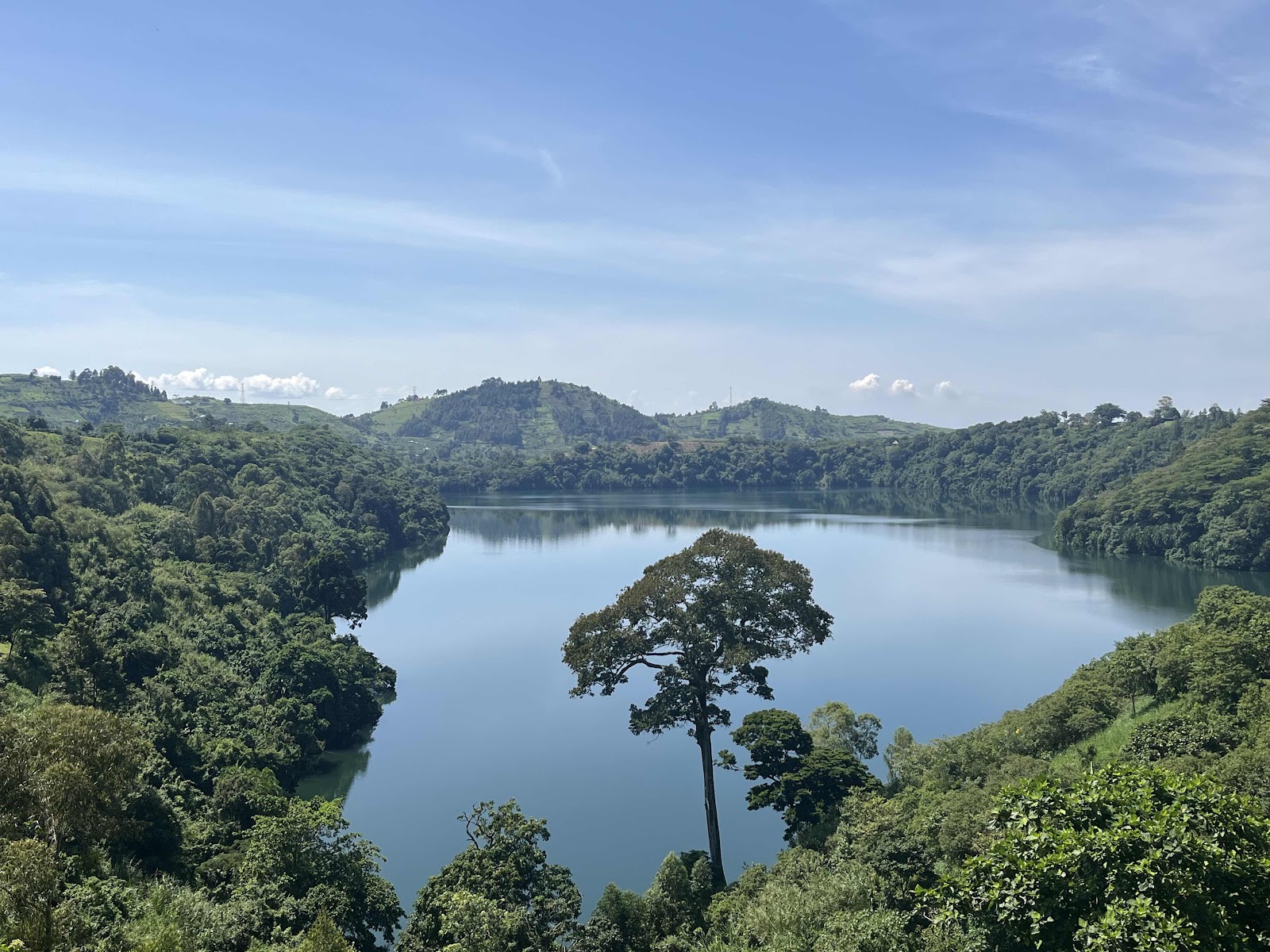
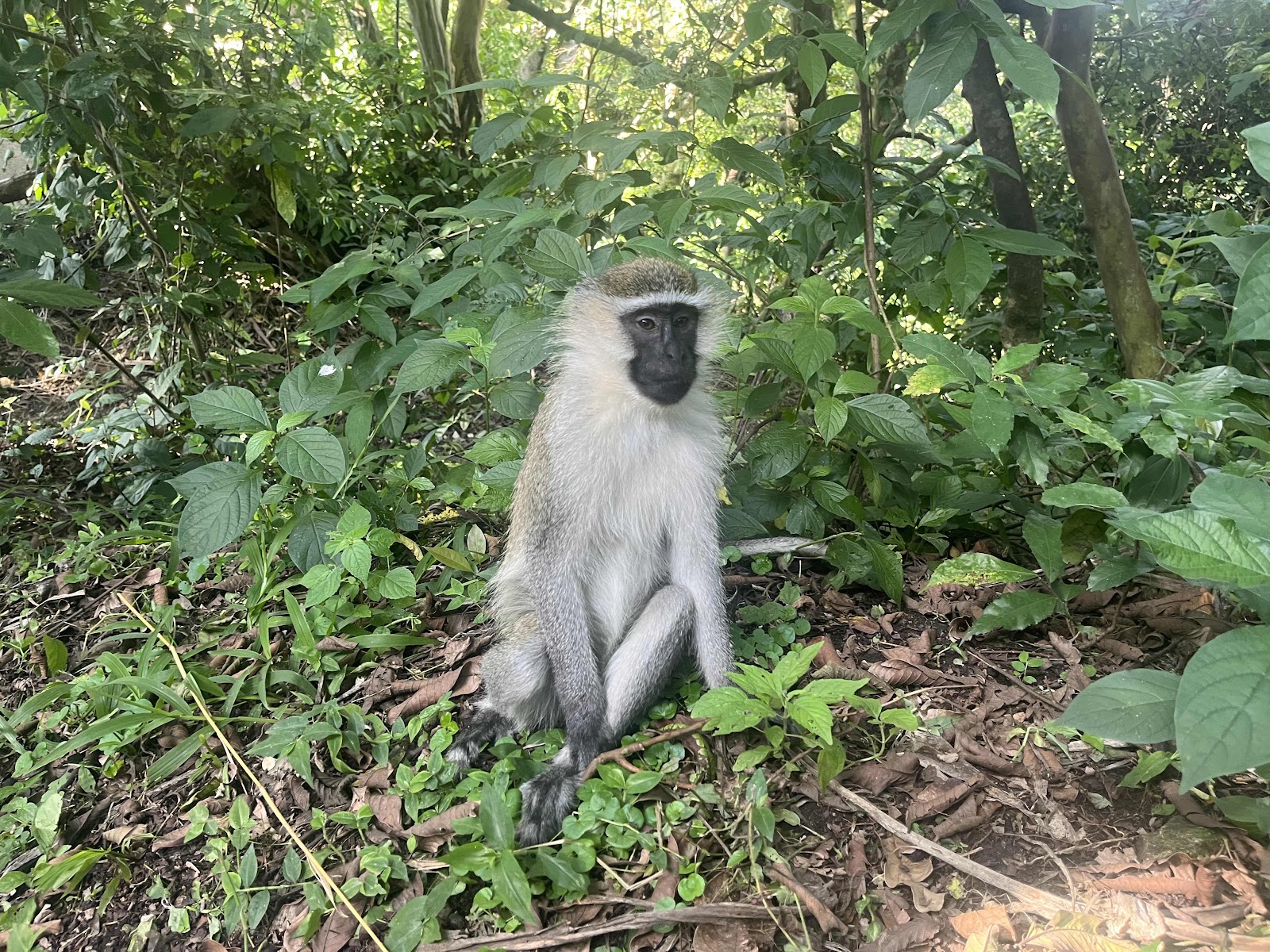
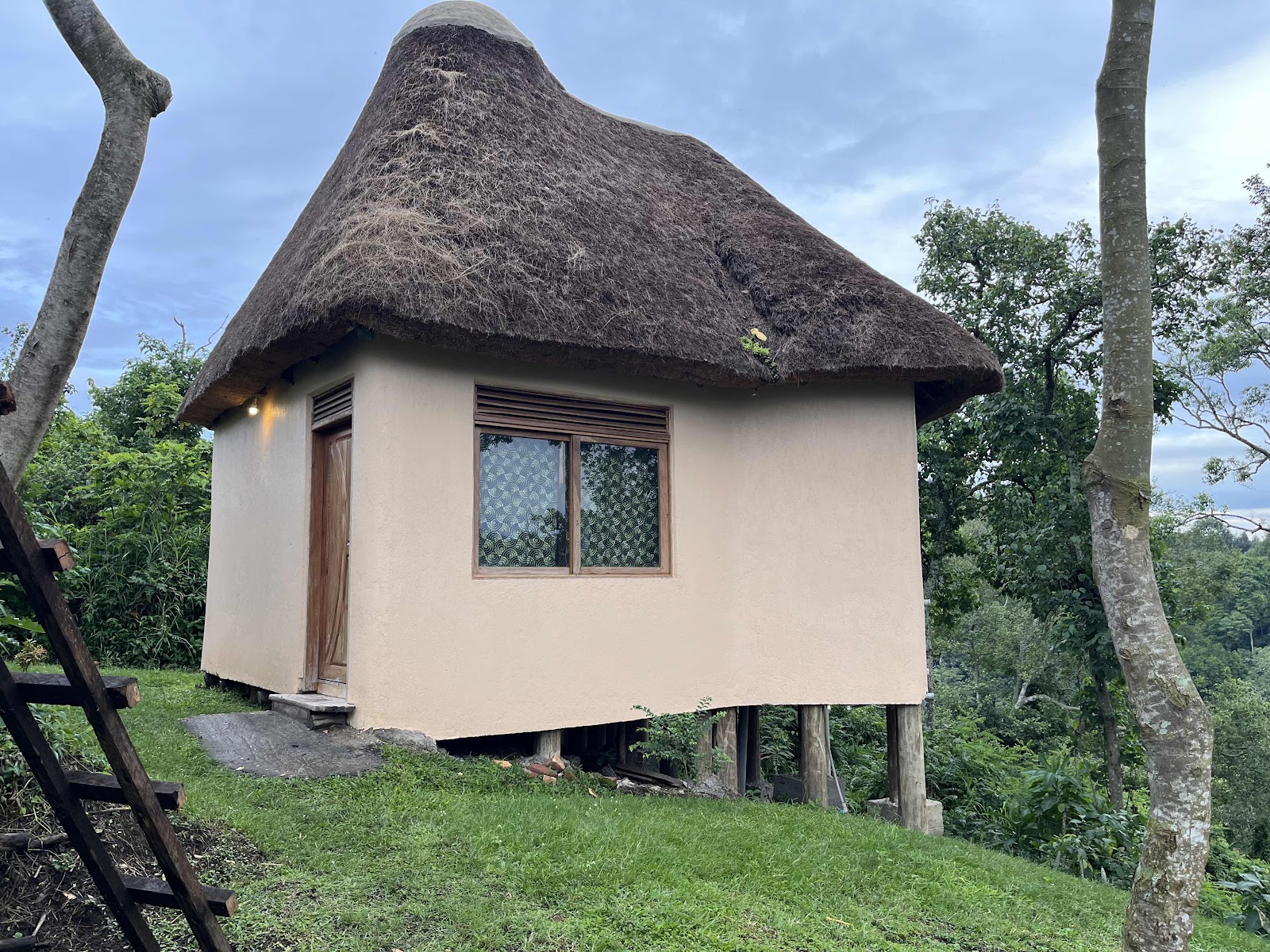
You see movement in eastern DRC is quite restricted for security reasons. Roads are in poor condition and it is ill advised to go long distances. It feels like a luxury to be able to move on the water. Semuliki National Park awaited us as we passed through and up the Ugandan steep hillsides of terraced farms. Baboons and large birds are found throughout. We spent the week in the region on a crater lake in a beautiful nature preserve. Our cabin sat high on the hillside in full view of two kinds of colobus monkeys-the black and white and red colobus and vervets. It was like we had broken into a monkey family convention. There was a monkey and baby in every tree. You could hear the call of the turaco, cranes, and ducks. It was really beautiful and one did not need to go very far to do birdwatching. We went on a 9-mile hike one day around crater lakes, to Makuma Falls. Warren and I were surprised to see how interested Emmanuel was in all the bird species, and his ability to spot various species all while walking 9 miles! Our favorite bird is the Great Blue Turaco, a stately blue bird with a long crest and bright red beak. If you enjoy birds, the Merlin App from Cornell University is a great way to identify birds by their appearance, flight pattern, and call. Recently I found a recording of a robin chat from 1977 from our province in DRC and a couple more recent recording….same species but a unique and different generation.
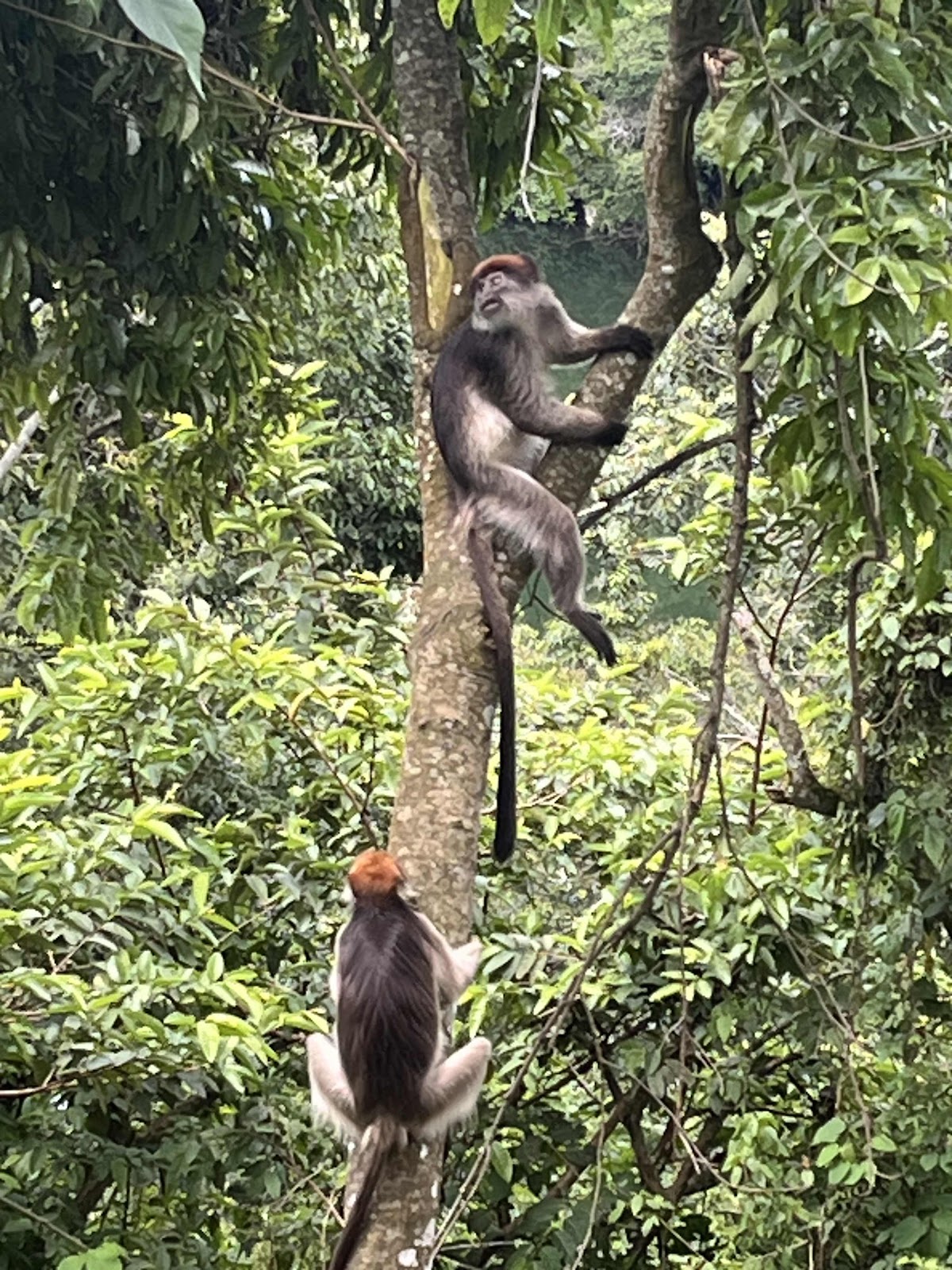
It was a week in nature for us, a week I needed. Warren was along for the ride. Even coming back to DRC I am noticing the birds in the trees anew. These birds are around me all the time, but I do not always notice them. It takes a bit of effort to make the journey, but somehow the effort is part of it. I appreciate greatly the beauty that surrounds us here in the village, and the fields that produce ample food. We continue to pray for this village that we call home.
Western Medical Training & Difficult Realities
The hospital keeps us busy. I (Lindsey) am learning what palliative care looks like in this setting. I have had a couple of children with serious health conditions for which chemotherapy and home oxygen would be available in the west. In our setting these resources are very limited and done in the hospital. So palliative care becomes more hospital-based with breaks to go home. It is grounded in family and repairing relationships.
I (we) am often reminded that my training is different. It can be a challenge to practice in a resource poor environment with comparatively high level of medical knowledge. In a resource poor environment one needs to adopt a public health mindset, step back and ask what is an appropriate use of resources in this situation? Sometimes we lack medications to treat tuberculosis and HIV. How should I anti-coagulate a child with a calcified blood clot in the atrium? How should we handle children with chronic diseases like sickle cell anemia? Labwork is expensive and the medications a bit dangerous if not used correctly. How do we do no harm? How do I share/apply my medical knowledge in this setting with people who have folk beliefs? Sometimes I feel like I am practicing medicine in another era…but I carry on and try to provide good care to each child in front of me.
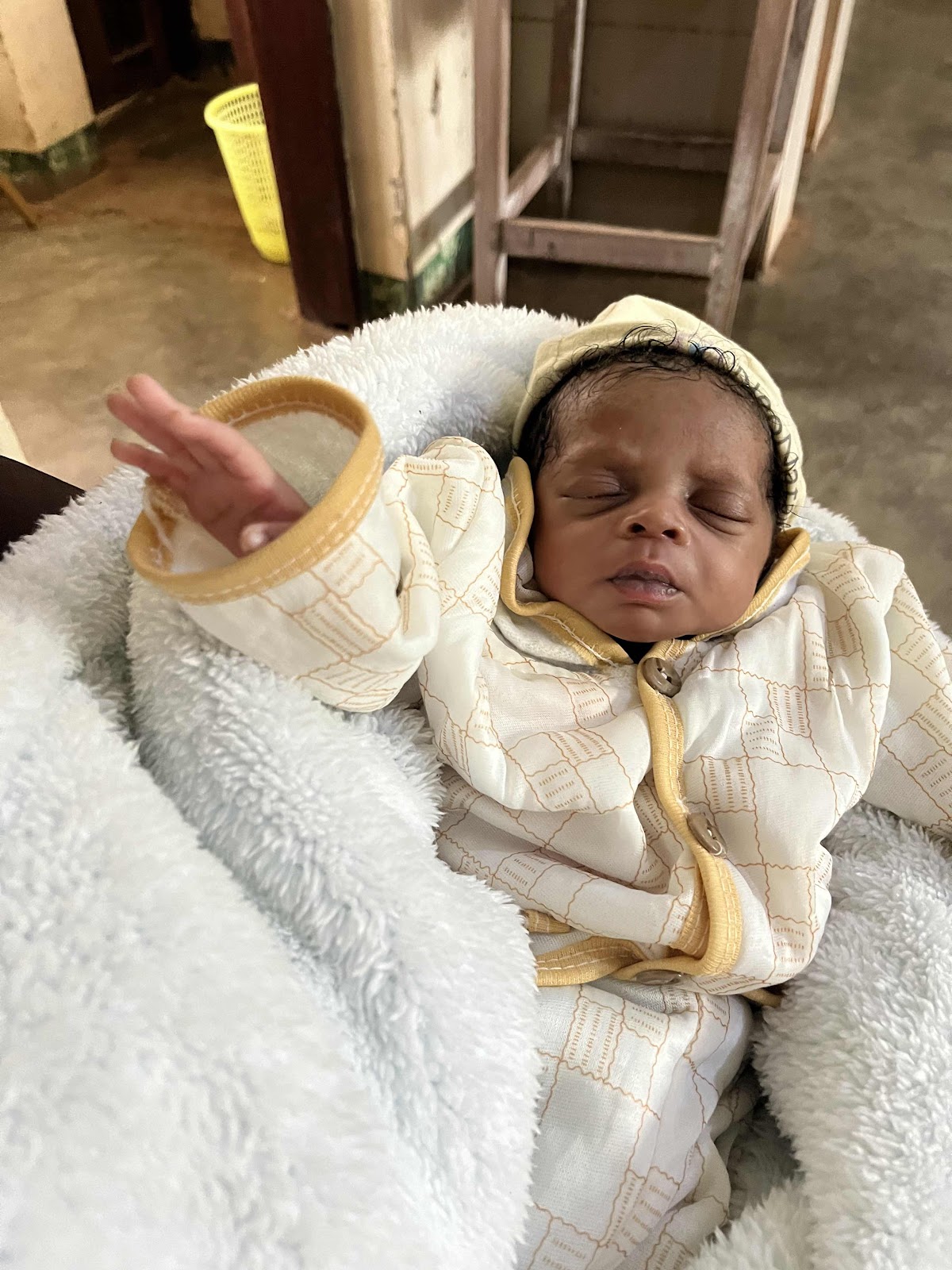
A couple of weeks ago on the maternity ward a mother of twins slipped through the cracks. After she had been discharged she was spotted giving her babies sugar water because she was not lactating. The mother had benefitted from formula for her twins during her hospitalization, but she had already been discharged and the formula had run out. No one realized what was going on and that she was essentially homeless. We sat down with this mother and her severely underweight babies to find out what was happening. It was heartbreaking. The woman lived alone, selling charcoal to provide for herself, and did not currently have a home or family to go back to. I am a foreigner in this context, but this did not seem like a good home situation to go back to...spending hours in the country burning wood to make charcoal. We are still working on a good discharge plan for her. We need to improve our maternity and neonatal care to avoid this happening again. Needless to say, we began feeding her babies immediately and they are thriving!
The bittersweet realities of medicine breeze by us daily, but sometimes smack us in the face. Birth is a joyful time, but can also be one of the riskiest times in life for a woman. A few weeks back a pregnant woman came in very agitated, febrile, and extremely ill. She underwent an urgent c-section and then died of meningitis. She left a beautiful baby girl behind...a beautiful baby also suffering from meningitis. After a couple of weeks of treatment and formula the baby is thriving and went home with her grandmother yesterday. What a joy it was to see the baby's recovery, but what sadness to lose a pregnant mother.
Visitors
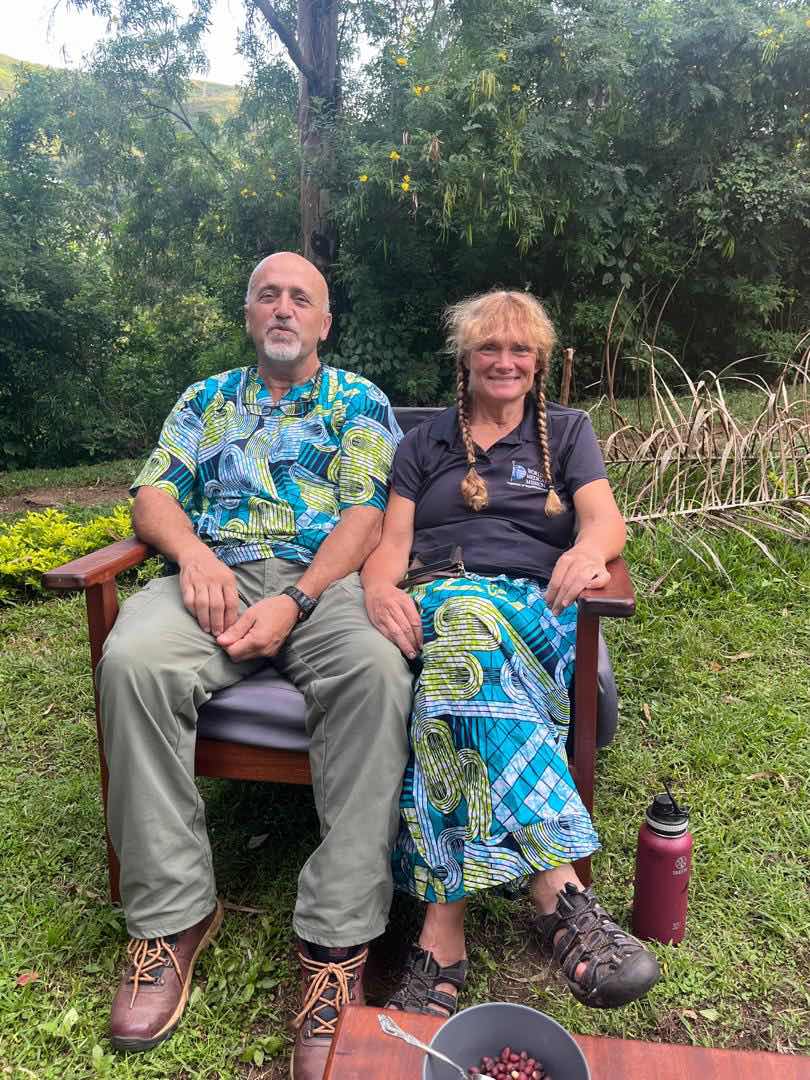
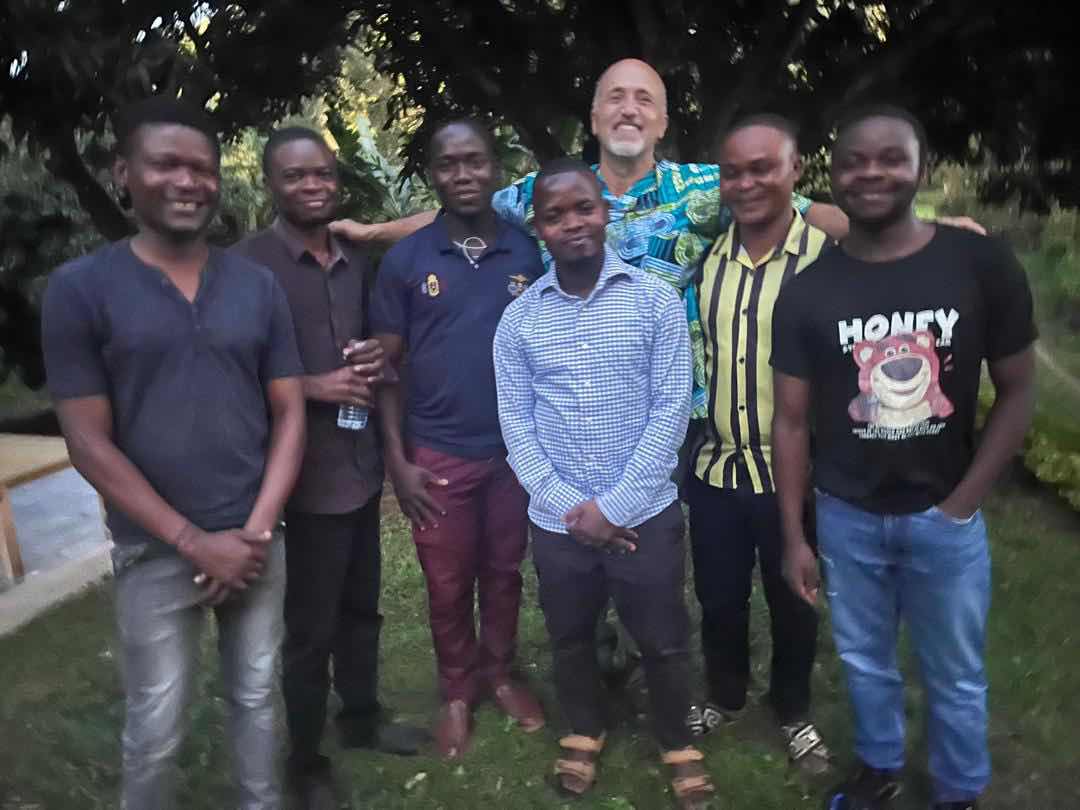
We are so grateful for the help of Ellen and Iyad in the surgical department these last few weeks. It was their second trip to Nyankunde. Iyad fixed anesthesia machines, helped with odd jobs in addition to providing anesthesia/patient care. Ellen organized storerooms, worked on surgical sets, and looked at ways to systematize what we are doing in the theater. They brought some important equipment and personal items for us. What is so remarkable about this couple is that they really love to be the hands and feet of Jesus and look for ways to serve others. We were so blessed by them and their willingness to come out!
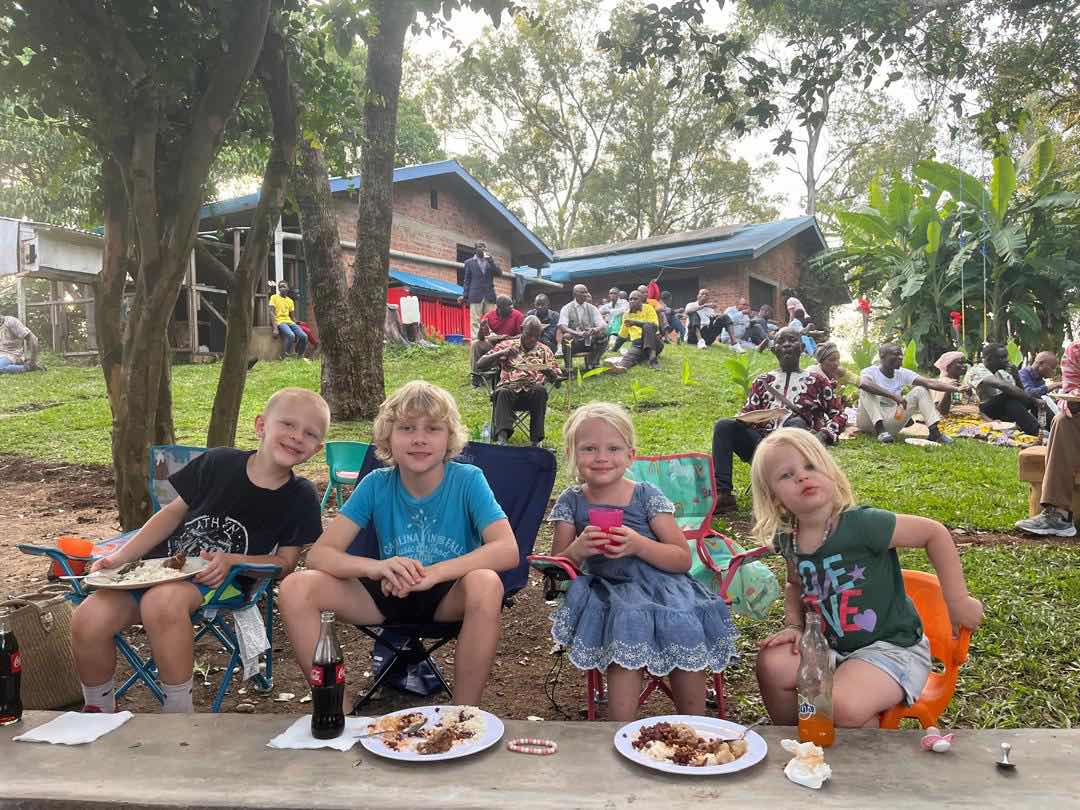
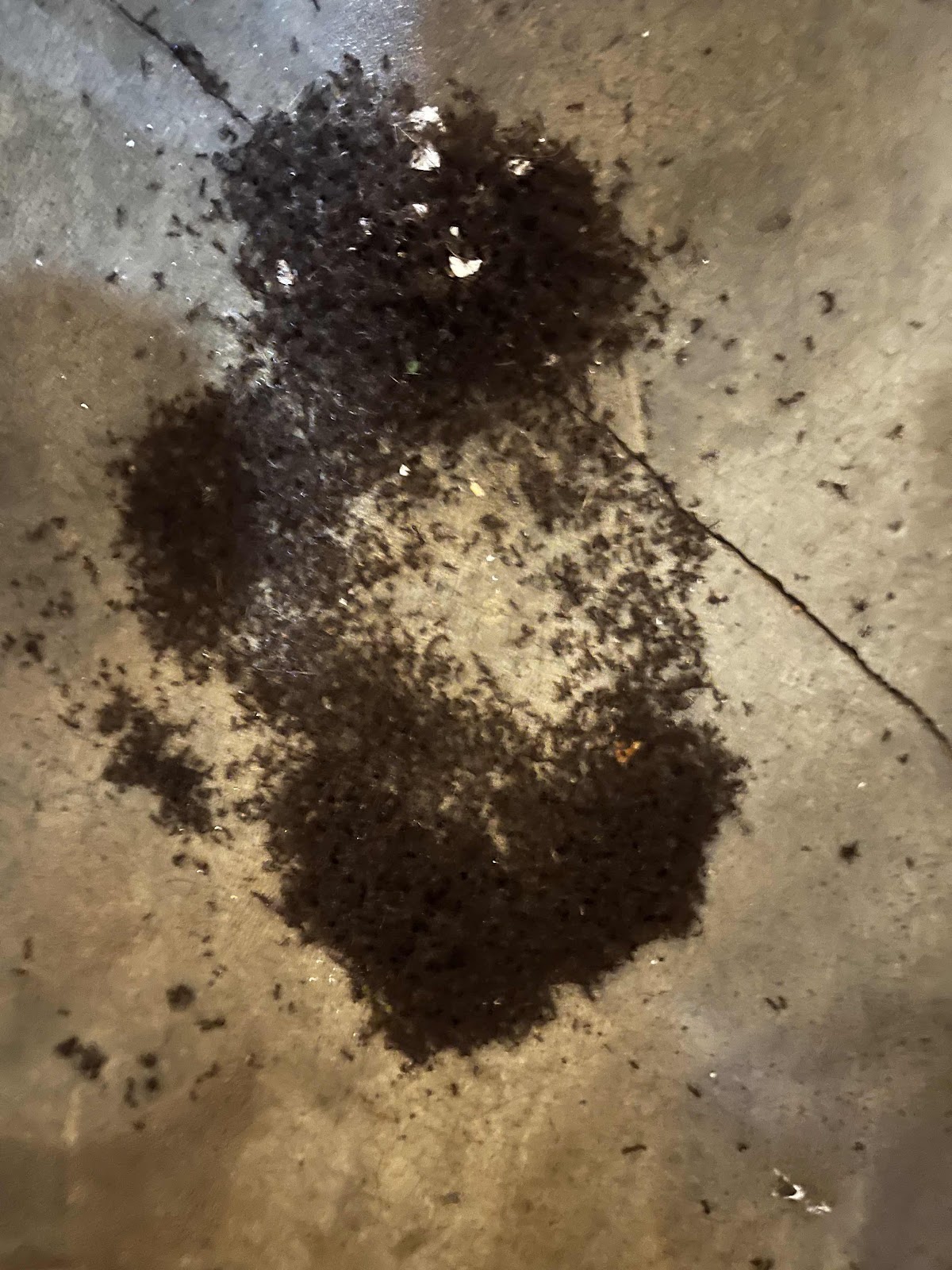
“Oh when the ants go marching in..”
It was a casual Saturday afternoon…this is until the ants invaded our house! Emmanuel was in his hammock and declared that the ceiling and walls were moving. We mobilized very quickly with various products and even a blow torch inside. Cut them off here and contain them from going further, then take them out! I tell you it was war! At the end of it all, I swept up over 100grams of ants. Today our gardener has been working on clearing the ant kingdom from our front yard. I am told that locals don’t mind too much when ants pass through because they clean up organic material. All I can say is that this would not have worked for us! I fear what would have happened had we not been home. The ants would have eaten us out of house and home.
Rural Africa
Rural Africa is changing, especially in places like DRC. More and more people are flocking to cities for security, better schools, and availability of resources. This is all fine I suppose, but the rural areas are suffering greatly. The military has an vested interest in the economics of region (to the extent that it affects cities) and roads between cities. Outside of these limited areas, much of our region is controlled by armed groups. This means it is more difficult to move between areas controlled by different armed groups. There is a group called Allied Democratic Forces, a M*sl*m extremist group, that preys on these rural areas. They have hampered agriculture in both Ituri and North KIVU Provinces such that people do not feel safe going to their fields. This affects people that we know and their ability to farm and make a living. One consequence is that more and more food is imported from places like Uganda and prices go up. The poor get poorer and the rich get richer. The few brave enough to plant and harvest, such as the cacao farmer, put themselves at risk from extremists. People often plant fields in several locations with the hope that at least one will succeed. Very little is assured. These are daily realities that we see and sometimes forget to put into words.
Prayer Requests
-Pray for our medical work to glorify the Lord.
-Pray for hospital leadership to honor their word and fiscal responsibilities.
-Pray for security of our region, especially rural areas, and improvement of travel. Pray specifically that the efforts of extremist groups will be thwarted.
-Pray for the feasibility of an upcoming hospital mission water survey.
Lindsey for us
General surgeon near me - Find skilled general surgeons near you for safe and effective surgeries.
ReplyDelete